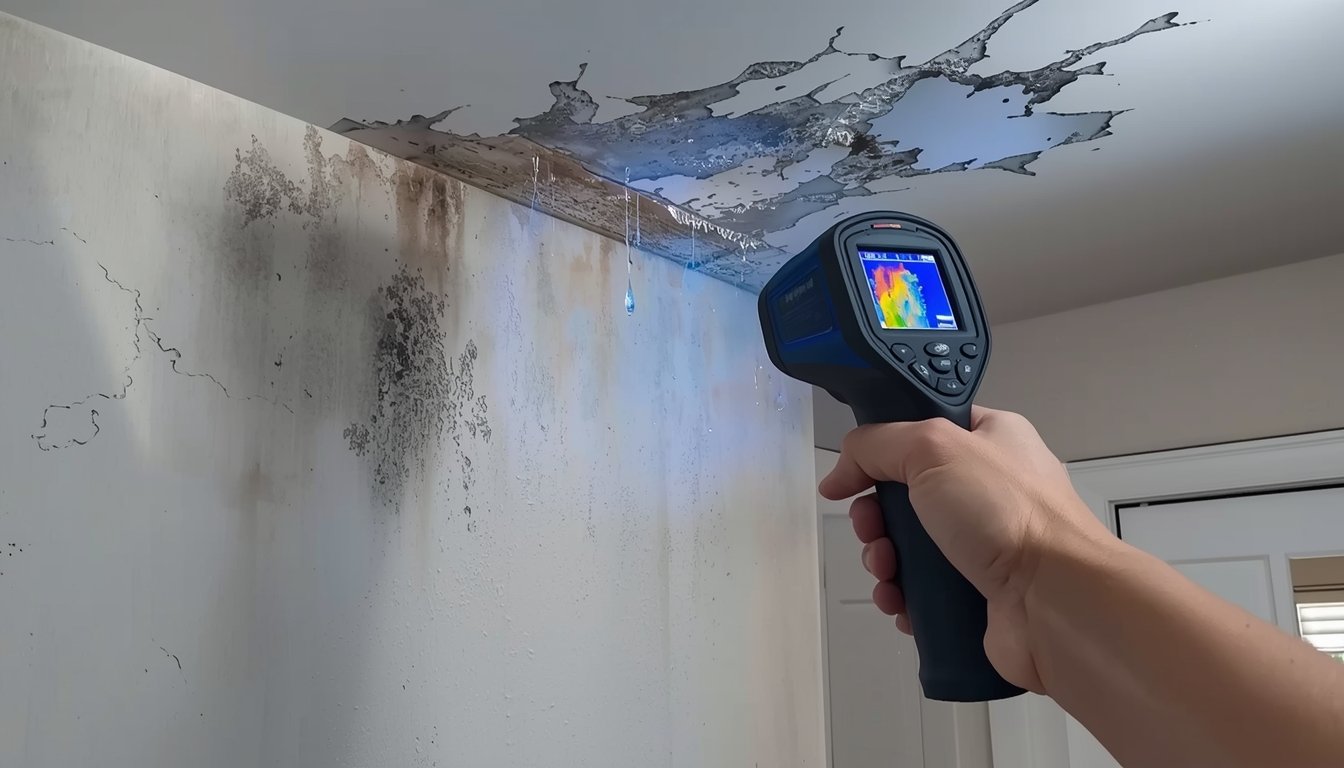
A thermal camera can help identify surface temperature patterns linked to several common household problems, including heat loss, insulation gaps, air leaks, moisture-related temperature changes, HVAC performance issues, and unusual hot spots around some electrical components. It does not diagnose those problems directly, but it can help show where further inspection may be needed.
How It Works
A thermal camera reads infrared energy from a surface and converts it into an image showing warmer and cooler areas. In a home, that allows walls, ceilings, floors, windows, doors, ducts, and equipment surfaces to be compared visually.
The camera is showing temperature differences on the surface being scanned. It is not seeing inside the wall or identifying the exact cause of the pattern by itself.
What It Can Do
Used correctly, a thermal camera can help identify several types of issues that create unusual surface temperature patterns.
- Heat loss around windows, doors, and other openings
- Cold spots that may suggest missing or uneven insulation
- Air leakage patterns around wall junctions, frames, and vents
- Moisture-related temperature changes on walls and ceilings
- Unusual hot or cold areas around HVAC components and ducts
- Visible hot spots around some accessible electrical components
- Temperature differences across floors, ceilings, and exterior walls
Limitations / What It Cannot Do
A thermal camera cannot confirm the exact cause of a problem on its own. A cold patch might be related to insulation, air movement, moisture, or a normal change in building material. The image only shows the surface temperature pattern.
It also cannot see through walls or directly identify hidden water, mold, or internal damage. It may show a pattern that suggests one of those issues, but it does not confirm what is happening behind the surface.
Reflective materials, weak temperature contrast, weather conditions, and poor scanning technique can also make results harder to interpret. That means a thermal image should be treated as a screening tool rather than a complete diagnosis.
When It Works Best
A thermal camera works best when there is a noticeable temperature difference between areas being compared. This makes insulation gaps, drafts, and other thermal patterns easier to see.
It is most useful when scanning broad surfaces methodically and comparing nearby areas under similar conditions. It also works better when the user understands that the camera is looking for patterns rather than proving causes.
Common Misconceptions
A common misconception is that a thermal camera can directly find any hidden problem in a house. In reality, it only helps identify temperature patterns that may point to a problem.
Another misconception is that every unusual hot or cold area means damage. Some temperature differences are normal and may come from sunlight, airflow, material changes, or recent heating and cooling.
Some people also assume that if nothing unusual appears on the image, there is no issue. That is not always true, because some problems may not create enough visible surface contrast at the time of scanning.
Final Answer Summary
A thermal camera can help identify problems related to heat loss, insulation, air leakage, moisture-related temperature changes, HVAC performance, and some electrical hot spots. It is most useful for showing where a problem may be located, but it does not diagnose the exact cause by itself and usually works best as part of a broader inspection process.