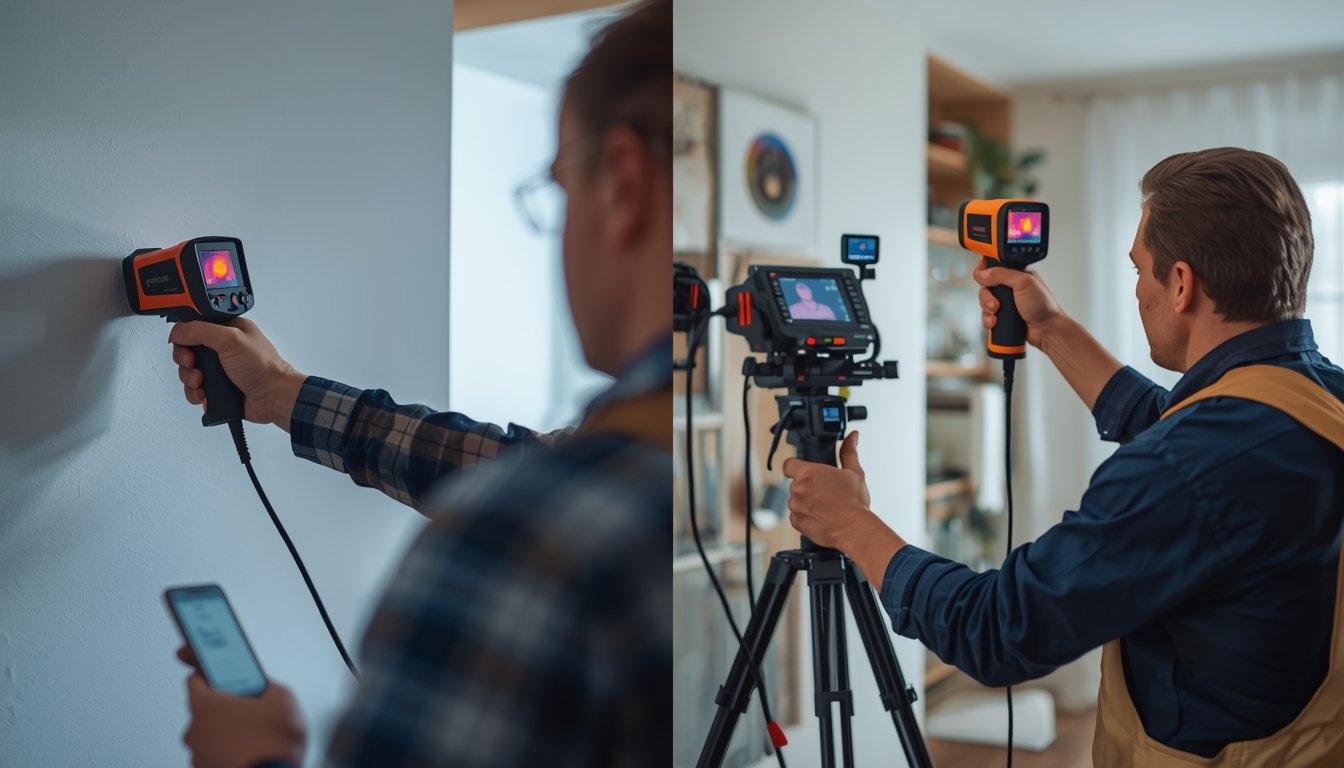
You can use a thermal camera yourself when you want to do a basic home check for surface temperature differences, such as cold spots, drafts, insulation gaps, or unusual heating and cooling patterns. You should hire a professional when you need a more complete diagnosis, a formal inspection, or a deeper assessment that combines thermal imaging with other testing methods.
How It Works
A thermal camera reads infrared energy from a surface and turns it into an image showing warmer and cooler areas. In a house, this can help show where temperatures look different across walls, ceilings, windows, ducts, or other surfaces.
That makes it useful as a screening tool. It shows patterns that may suggest a problem, but it does not confirm the exact cause of the pattern by itself.
What It Can Do
For basic home use, a thermal camera can be useful for identifying areas that may need a closer look.
- Show cold spots and possible heat loss
- Highlight unusual temperature patterns around windows and doors
- Help compare insulation performance in different areas
- Show surface temperature differences around ducts and vents
- Point to areas that may need follow-up inspection
Limitations / What It Cannot Do
A thermal camera cannot confirm every problem on its own. It does not see through walls, and it does not prove whether a pattern is caused by moisture, air leakage, insulation gaps, or something else. It only shows the surface temperature pattern that is visible at the time of scanning.
That is one reason a professional inspection can be important. A professional may use other diagnostic tools as well, such as blower doors, moisture meters, smoke tools, gas leak detectors, or carbon monoxide detectors, depending on the type of assessment being done.
A professional is also more likely to understand how reflective surfaces, weather, emissivity, viewing angle, and building materials can affect the image. These factors can make a pattern look more important or less important than it really is.
If you need a formal report, a pre-purchase home inspection, a full home energy audit, or a more confident diagnosis of a hidden issue, a professional is usually the better choice.
When It Works Best
A do-it-yourself thermal camera is usually most useful when you have a simple goal, such as checking a drafty room, comparing walls for heat loss, or scanning around vents, ceilings, or windows for obvious temperature differences.
Hiring a professional is usually more useful when the issue is broader, harder to interpret, or connected to safety, major repair decisions, or full-house efficiency testing. A professional assessment can also be more useful when multiple diagnostic methods need to be combined.
Common Misconceptions
A common misconception is that having a thermal camera gives the same result as hiring a professional. It does not. The camera is only one tool, and professionals often combine it with other testing methods and trained interpretation.
Another misconception is that homeowners should never use thermal cameras themselves. That is not true either. A careful homeowner can use one for simple screening and comparison tasks around the house.
Some people also assume that if a thermal image looks clear, the diagnosis must be certain. In reality, a clear pattern can still have more than one possible cause, and that is often where professional interpretation matters most.
Final Answer Summary
Use a thermal camera yourself when you want to do simple screening for temperature differences and identify areas that may need more attention. Hire a professional when you need a fuller diagnosis, a formal inspection, safety-related evaluation, or a more complete assessment that uses thermal imaging together with other tools and experience.