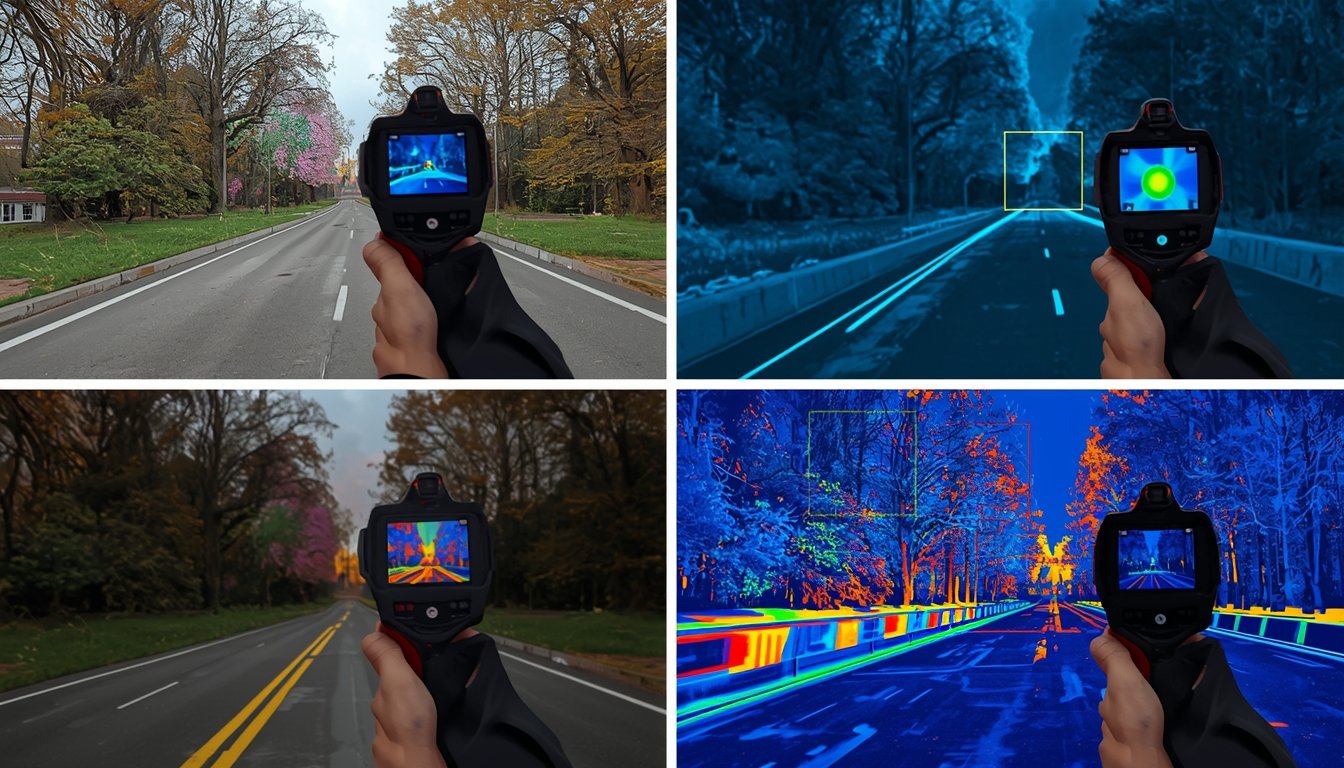
A thermal camera is worth using at home when you need to locate hidden issues like heat loss, air leaks, moisture, or system inefficiencies without opening walls. It is most valuable when a problem is suspected but not visible, and you want to narrow down the cause before taking action.
Situations where a thermal camera provides real value
- Rooms that feel colder or warmer than the rest of the house
- Suspected insulation problems in walls or ceilings
- Unexplained increases in heating or cooling costs
- Possible moisture or leak issues with no visible signs
- Checking HVAC performance and airflow distribution
A thermal camera becomes especially useful when standard checks are not enough to identify the issue. For example, if one room consistently feels colder but there are no obvious drafts or visible damage, a thermal scan can reveal whether heat is escaping through walls or ceilings.
It is also valuable for early detection. Problems like moisture buildup or insulation gaps often develop before they become visible. Thermal imaging allows you to identify these issues sooner, which can prevent larger repairs later.
Another key advantage is reducing guesswork. Instead of checking multiple areas blindly, you can focus on the specific locations where temperature differences appear. This makes troubleshooting faster and more efficient.
However, the value comes from using it at the right time. If there is no clear reason to investigate, the results may not provide useful insights.
When a thermal camera is not necessary
- When problems are already clearly visible
- When there is no temperature difference to detect
- For confirming exact causes without additional checks
- For general scanning without a specific purpose
In many cases, a thermal camera is not needed if the issue is obvious. For example, visible water damage, clear drafts, or known insulation gaps can often be addressed without specialised tools.
It is also less useful when conditions are not suitable. Without a temperature difference between surfaces, the camera will not show meaningful patterns. This can lead to confusion or incorrect assumptions.
Another limitation is that it does not provide final answers. A thermal camera highlights where something may be wrong, but it does not confirm the exact cause. Additional inspection is always required.
Using the camera without a clear goal can also reduce its effectiveness. Scanning randomly without knowing what you are looking for often leads to unclear results and wasted time.
How to decide if a thermal camera is worth using
Deciding whether to use a thermal camera comes down to whether it will help you solve a specific problem more efficiently.
If you have a clear issue, such as uneven temperatures, suspected leaks, or unexplained energy loss, a thermal camera can provide useful insights. It helps you locate the problem area and understand how it is affecting your home.
On the other hand, if you are simply curious or looking for general improvements, the results may not justify the effort. The camera works best when you have a defined question or concern.
It is also important to consider timing. Using a thermal camera under the right conditions makes a significant difference. Without proper temperature contrast, even real issues may not appear clearly.
If you are unsure whether your situation is suitable, reviewing how a thermal camera works can help you understand when it is most effective.
Benefits of using a thermal camera for home maintenance
When used correctly, a thermal camera offers several practical benefits that go beyond basic inspection.
It allows you to detect problems early, often before they become visible or cause damage. This can reduce repair costs and prevent more serious issues from developing.
It also improves accuracy. Instead of guessing where a problem might be, you can see temperature patterns that point directly to the affected area. This makes repairs more targeted and efficient.
Another advantage is non-invasive inspection. You can assess walls, ceilings, and systems without cutting into surfaces, which reduces disruption and avoids unnecessary work.
These benefits make thermal cameras particularly useful for ongoing home maintenance, where early detection and efficiency are important.
How to get the most value from a thermal camera
To get the most out of a thermal camera, you need to use it as part of a structured approach rather than relying on it alone.
Start by identifying a specific issue you want to investigate. This gives you a clear focus and makes it easier to interpret results.
Next, ensure conditions are suitable. A clear temperature difference between surfaces is essential for accurate readings. Without this, the camera may not provide useful information.
Scan methodically and compare multiple areas. Patterns that repeat or stand out are more likely to indicate real problems.
Finally, confirm your findings with additional checks. This ensures that you address the correct issue and avoid unnecessary repairs.
Using the camera in this way turns it into a practical problem-solving tool rather than just a visual device.
Limitations to consider before using a thermal camera
While thermal cameras are useful, they are not a complete solution on their own. Understanding their limitations helps you use them more effectively.
They do not show objects behind walls or provide direct identification of materials. They only display temperature differences, which must be interpreted.
They also depend heavily on conditions. Without proper contrast or stable environments, results can be unclear or misleading.
Finally, they require some level of understanding to interpret correctly. Without this, it is easy to misread patterns and draw incorrect conclusions.
By recognising these limitations, you can use a thermal camera in situations where it provides the most value and avoid relying on it when it is not needed.