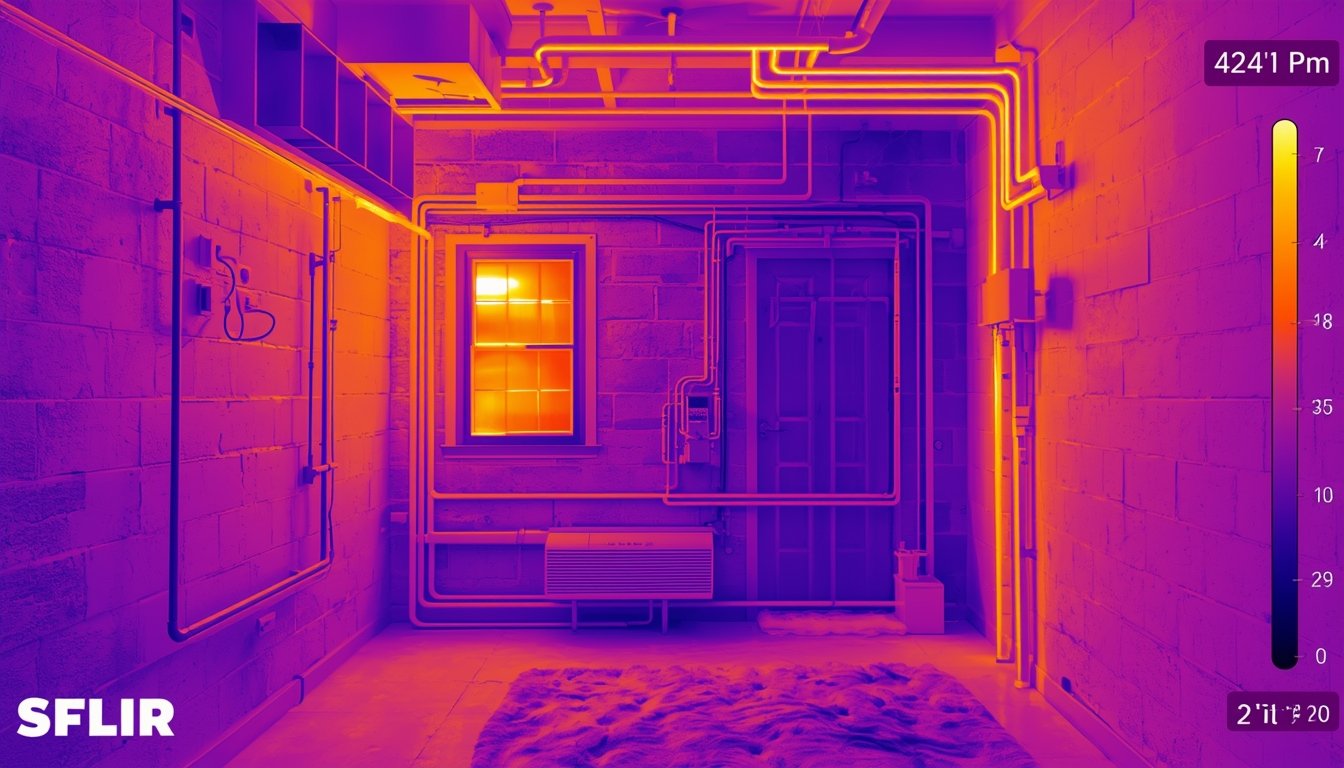
Yes, a thermal camera can help detect plumbing issues by identifying temperature differences caused by water flow, leaks, or damp materials. It does not see pipes directly, but it can reveal patterns that suggest where a plumbing problem may be located.
How a thermal camera helps identify plumbing problems
Plumbing systems often carry water at a different temperature than the surrounding materials. When pipes run through walls or floors, they can create subtle temperature patterns that a thermal camera can detect.
For example, a hot water pipe may appear as a warmer line behind a wall, while a cold water pipe may show as a cooler area. These patterns can help you trace the path of plumbing without opening surfaces.
Leaks are another common use. When water escapes from a pipe, it can spread into surrounding materials and change how they hold temperature. Damp areas often appear cooler than dry surfaces, making them visible in a thermal scan.
However, the camera is not detecting the pipe or the water itself. It is showing the effect of temperature differences. This means interpretation is important, especially when multiple factors could be influencing the image.
If you want to better understand how these moisture-related patterns appear, it helps to review how thermal cameras detect moisture and hidden leaks before drawing conclusions.
Common plumbing issues visible in thermal scans
Thermal imaging is most useful when plumbing problems create clear temperature differences. This often happens when water is moving, leaking, or affecting surrounding materials.
Typical plumbing-related issues that may appear include:
- Hidden leaks behind walls or under floors
- Moisture spreading through ceilings or surfaces
- Hot water pipes creating visible heat patterns
- Uneven temperature distribution caused by damaged insulation around pipes
For example, a slow leak behind a wall may create a cool patch that gradually expands over time. Similarly, a hot water pipe may appear as a consistent warm line, helping you identify its location.
These patterns can help narrow down where a problem exists, especially when there are no visible signs yet. This reduces the need for unnecessary damage when trying to locate an issue.
It’s important to compare patterns across different areas. Not every temperature difference indicates a plumbing issue — air leaks or insulation gaps can produce similar results.
How to confirm and respond to plumbing issues
Once a thermal camera highlights a possible plumbing problem, the next step is to confirm the cause before taking action. This ensures you are addressing the right issue.
After identifying a suspicious area:
- Check for visible signs such as stains, dampness, or soft materials
- Listen for sounds like dripping or running water behind surfaces
- Use a moisture meter if available to confirm dampness
- Monitor the area over time to see if the pattern changes
These steps help determine whether the issue is actually plumbing-related or caused by something else.
If a leak is confirmed, the priority is to stop the water source and repair the affected pipe. In some cases, professional assistance may be needed, especially if the problem is hidden or complex.
A thermal camera is most valuable as a locating tool. It helps you find where to investigate, reducing guesswork and avoiding unnecessary damage. Combined with proper confirmation, it can make diagnosing plumbing issues faster and more efficient.