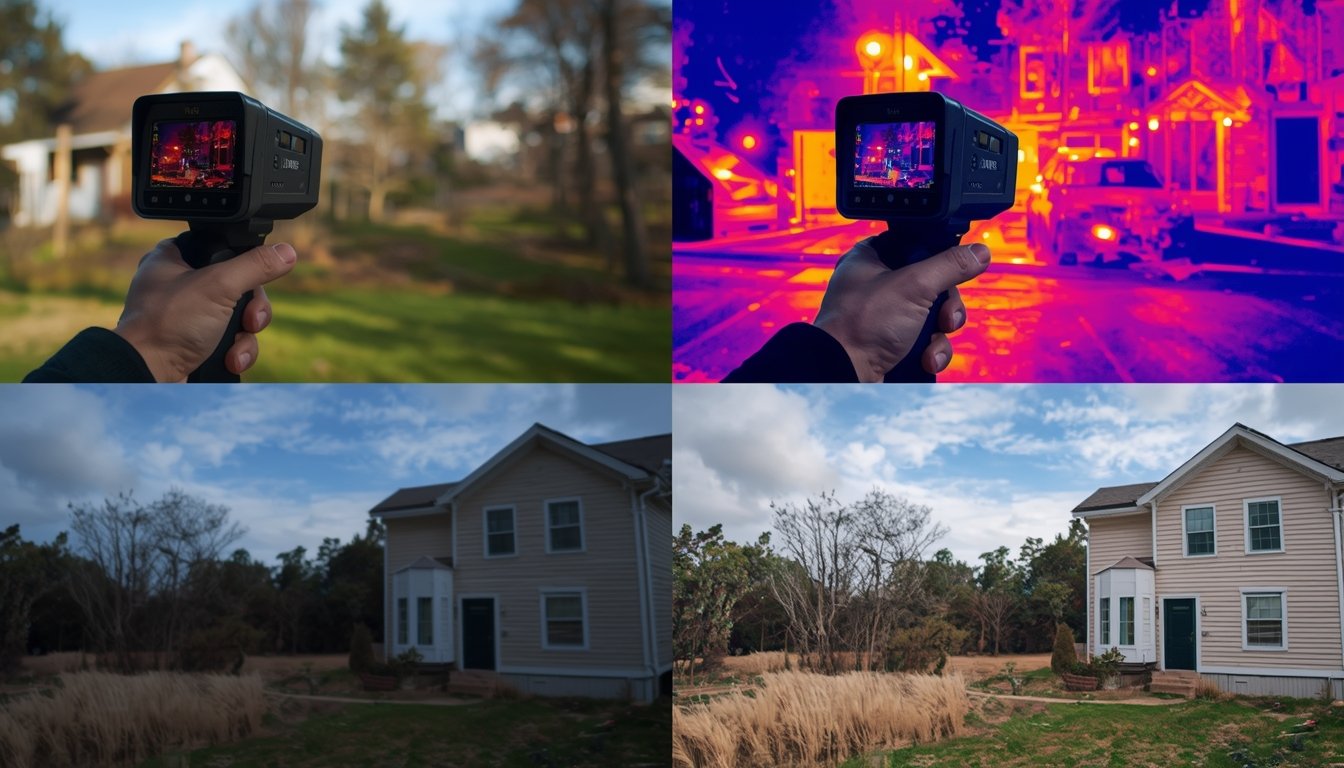
Thermal cameras detect moisture and hidden leaks by identifying temperature differences on surfaces caused by damp materials. Moisture changes how walls, ceilings, and floors absorb and release heat, which creates visible patterns in a thermal image that can point to where a leak or water buildup is occurring.
How thermal cameras detect moisture through temperature differences
A thermal camera does not detect water directly. Instead, it measures how heat moves across surfaces. When a material becomes damp, its thermal properties change, meaning it heats and cools differently compared to dry areas.
For example, a wet section of drywall often appears cooler than the surrounding dry surface. This happens because moisture absorbs heat and slows down temperature changes. As a result, the affected area stands out clearly in a thermal image.
This is why thermal imaging is so useful for locating hidden leaks. Even when there are no visible signs of water, the temperature difference can reveal where moisture is present.
However, these readings must be interpreted carefully. Not every cool or warm area indicates moisture. Factors like airflow, insulation gaps, or structural elements can produce similar patterns. Understanding how a thermal camera works is essential before relying on the results, which is why it helps to review how a thermal camera works when learning to interpret scans.
Where thermal cameras are most effective for finding hidden leaks
Thermal cameras are most effective in areas where moisture is likely to affect surface temperature in a noticeable way. This typically includes walls, ceilings, and floors where leaks can spread into surrounding materials.
Common areas where thermal imaging works well include:
- Walls containing plumbing pipes or fittings
- Ceilings below bathrooms or roof structures
- Floors above or below water sources
- External walls exposed to weather conditions
In these locations, leaks often cause moisture to spread unevenly. This creates irregular temperature patterns that are easier to detect with a thermal camera.
For example, a slow leak behind a wall may not show visible damage at first, but it can create a cooler patch that expands over time. Similarly, a roof leak may appear as a spreading temperature difference across a ceiling before any staining becomes visible.
The key advantage is early detection. By identifying these patterns early, you can investigate further before the problem becomes more serious or causes structural damage.
Common thermal patterns that indicate moisture problems
When scanning for hidden leaks, the goal is to recognise patterns rather than focus on isolated spots. Moisture tends to spread, so thermal images often show irregular shapes rather than sharp lines.
Typical patterns associated with moisture include:
- Large, uneven cool patches that do not match the structure
- Soft edges where temperature gradually changes across a surface
- Areas that remain cooler over time compared to surrounding materials
- Patterns that expand or shift when conditions change
For example, a damp ceiling may show a broad, irregular cool area that grows after rainfall. A plumbing leak may appear as a concentrated patch that slowly spreads outward.
These patterns help distinguish moisture from other causes. Insulation gaps often produce consistent shapes, while airflow tends to create streaks or directional patterns. Moisture, by contrast, usually appears more diffuse and irregular.
Recognising these differences is important for accurate diagnosis. Without this understanding, it is easy to misinterpret what the thermal image is showing.
Limitations of thermal imaging for leak detection
While thermal cameras are effective for locating potential moisture problems, they have limitations that must be understood to avoid incorrect conclusions.
A thermal camera cannot:
- Confirm the exact source of a leak
- Detect water if there is no temperature difference
- Distinguish between moisture and other causes of temperature variation
- Provide precise measurements of how much moisture is present
For example, if a leak has just started and has not yet affected surface temperature, it may not appear in a thermal image. Similarly, if indoor and outdoor temperatures are similar, the contrast may be too low to reveal moisture patterns.
Environmental factors also play a role. Air movement, sunlight, and surface materials can all influence how temperature appears in a thermal scan.
Because of these limitations, thermal imaging should always be combined with other inspection methods. It is a tool for locating potential problem areas, not confirming the final diagnosis.
How to confirm a leak after a thermal scan
Once a thermal camera highlights a suspicious area, the next step is to confirm whether moisture is actually present and identify the cause. This step is essential to avoid misdiagnosis.
After identifying a potential problem area:
- Check for visible signs such as staining, bubbling paint, or soft materials
- Use a moisture meter to confirm the presence of dampness
- Inspect nearby plumbing, roofing, or fixtures for possible sources
- Monitor the area over time to see if the pattern changes
These steps help determine whether the thermal pattern is caused by moisture or something else. For example, a cool patch caused by airflow will not show the same characteristics as a damp surface when tested.
Confirming the issue allows you to take targeted action, whether that involves repairing a pipe, fixing a roof issue, or improving drainage.
Using a thermal camera in this way reduces guesswork and helps you focus on the most likely problem areas without unnecessary damage to walls or ceilings.
Practical tips for improving accuracy when scanning for leaks
To get the most reliable results from a thermal camera, it’s important to use it under the right conditions and follow a consistent approach.
When scanning for moisture:
- Ensure there is a temperature difference between wet and dry areas
- Scan slowly and cover the entire surface evenly
- Compare multiple areas rather than focusing on a single spot
- Repeat scans under similar conditions to confirm patterns
For example, scanning after rainfall or when plumbing systems are active can make moisture-related patterns more visible. This increases the chances of detecting hidden leaks.
Consistency is also important. A pattern that appears repeatedly under the same conditions is more likely to indicate a real issue than a one-time variation.
By following these steps, you can improve the accuracy of your inspection and make better decisions about what to investigate or repair.