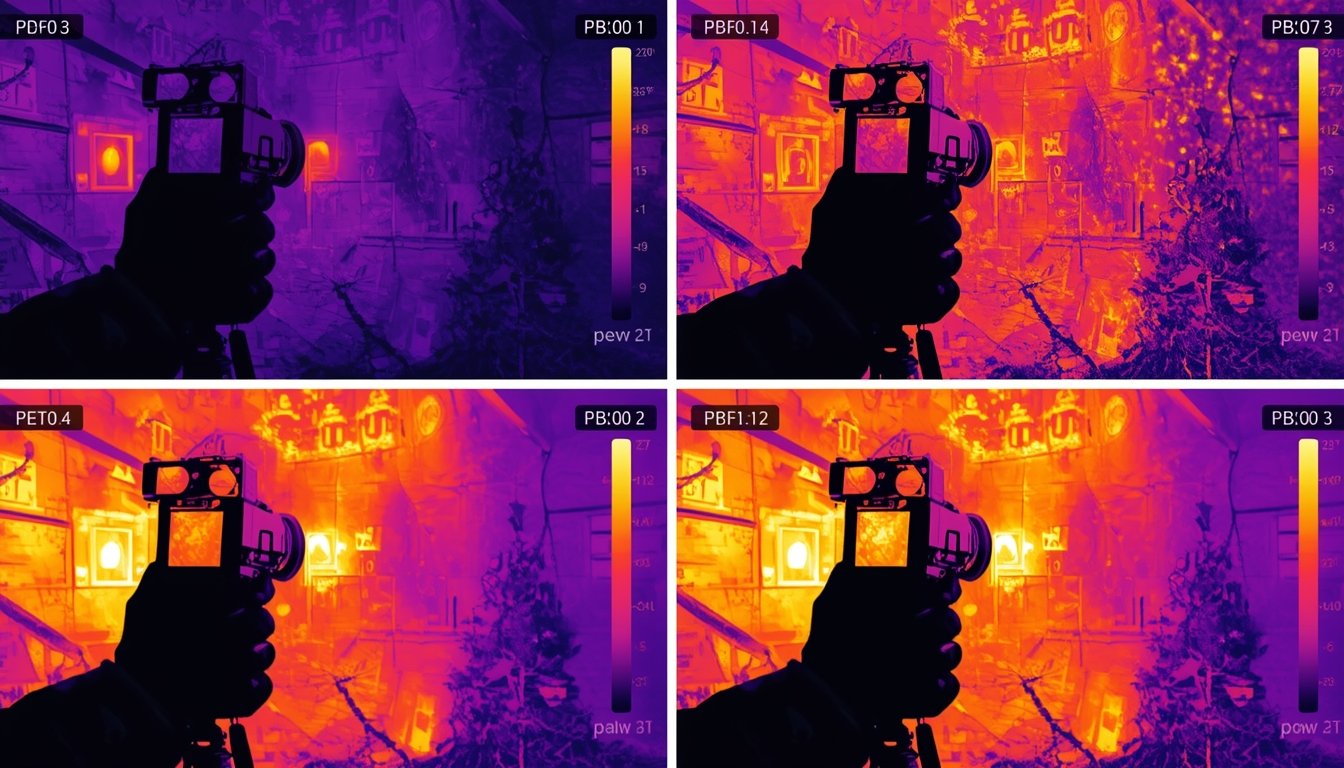
Common mistakes when using a thermal camera usually come down to poor conditions, misinterpreting temperature patterns, or expecting the camera to show things it cannot. These mistakes can lead to incorrect conclusions, even if the camera itself is working properly.
Using a thermal camera in the wrong conditions
One of the most common mistakes is scanning without enough temperature difference between surfaces. Thermal cameras rely on contrast, so if indoor and outdoor temperatures are similar, the image will show very little useful detail.
For example, trying to detect insulation issues on a mild day often produces flat or unclear images. Without a clear temperature gap, even real problems may not appear. This leads many people to assume there is no issue when one actually exists.
Another issue is scanning surfaces affected by external factors. Direct sunlight can heat walls unevenly, while wind or airflow can distort temperature patterns. These conditions create misleading results that don’t reflect what is happening inside the structure.
To avoid this, always aim for stable conditions with a clear temperature difference. If you’re unsure when to scan, it helps to understand the best conditions for using a thermal camera at home before starting.
Misinterpreting thermal images and patterns
A thermal camera does not diagnose problems — it only shows temperature differences. Misinterpreting these patterns is one of the biggest sources of error.
For example, a cold patch on a wall could indicate moisture, but it could also be caused by an air leak or missing insulation. Without additional checks, it’s easy to assume the wrong cause.
Common interpretation mistakes include:
- Assuming every cold area means moisture or a leak
- Confusing air drafts with insulation problems
- Ignoring structural patterns like studs or framing
- Overlooking reflections from shiny surfaces
Reflective materials, such as metal or glossy paint, can also create misleading readings by reflecting heat rather than showing actual surface temperature. This can result in patterns that don’t match reality.
To use a thermal camera effectively, focus on consistent patterns rather than isolated spots. Repeating or structured patterns are more likely to indicate real issues.
Expecting the camera to show hidden objects
Another common mistake is expecting a thermal camera to “see through” walls or directly reveal hidden objects. In reality, it only detects surface temperatures.
This means it cannot show pipes, wiring, or pests directly. It can only highlight temperature differences caused by those elements. For example, a warm line on a wall might suggest a pipe, but it does not display the pipe itself.
This misunderstanding often leads to overconfidence in the results. People may assume they have identified a specific issue when they have only detected a temperature variation.
To avoid this, treat the thermal camera as a guidance tool rather than a final answer. Use it to identify where to investigate further, then confirm findings with additional checks or inspection methods.
By understanding these limitations and avoiding common mistakes, you can use a thermal camera more effectively and make more accurate decisions about what to fix or investigate.