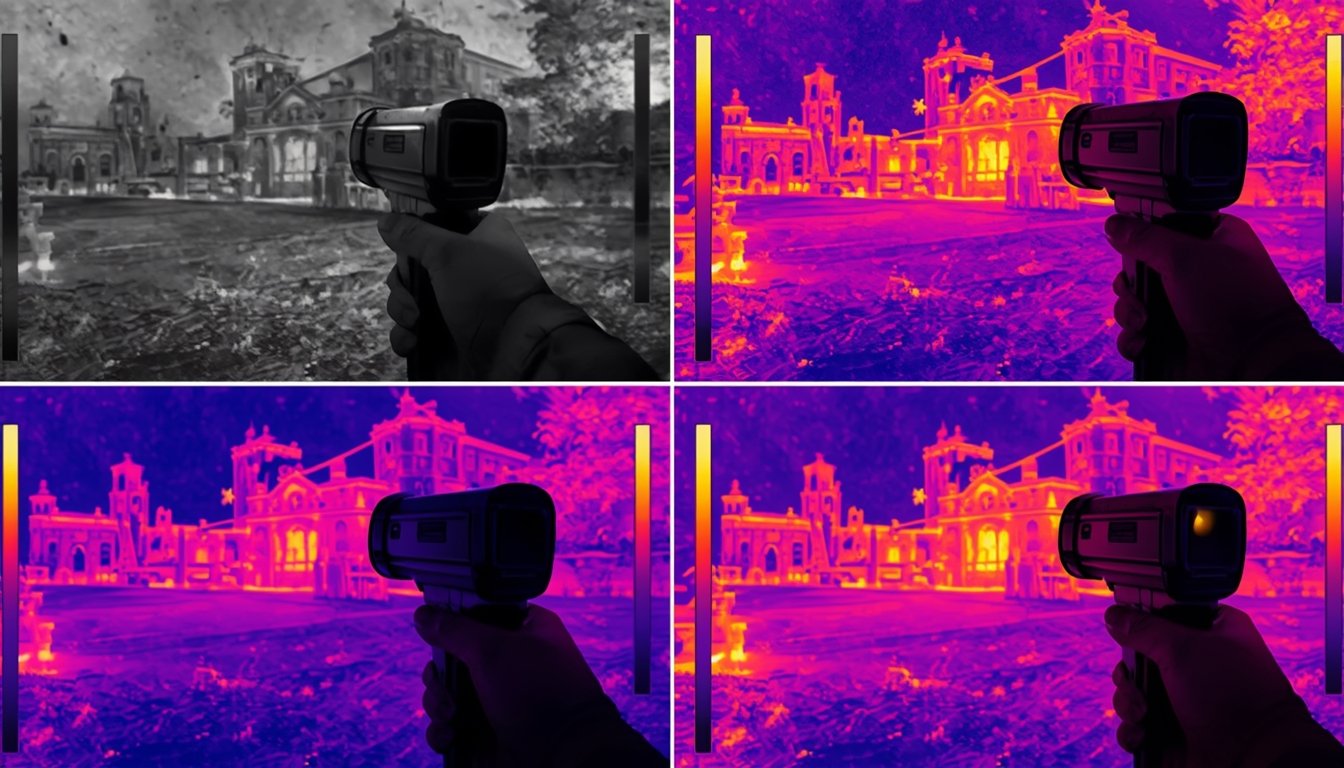
A thermal camera can detect temperature differences on surfaces, which makes it useful for identifying issues like heat loss, moisture, air leaks, and overheating components. However, it cannot see through walls or directly identify materials, meaning it shows patterns that must be interpreted rather than providing exact answers.
What a thermal camera can reliably detect in a home
- Heat loss through walls, ceilings, and floors
- Air leaks around windows, doors, and structural joints
- Moisture buildup affecting surface temperature
- Overheating electrical components or systems
- Uneven heating or cooling from HVAC systems
Thermal cameras are highly effective when a problem causes a visible temperature difference. For example, missing insulation allows heat to escape, which creates cooler areas on walls that show clearly in a thermal image.
Air leaks are another common use case. When outside air enters through gaps, it changes the temperature along edges and joints. These patterns are often easy to spot because they appear as streaks or concentrated areas of cooler or warmer air.
Moisture detection is also a key application. Damp materials tend to retain heat differently than dry ones, which allows thermal imaging to highlight potential leaks or water intrusion. While the camera does not detect water directly, it reveals the effects of moisture.
Electrical issues can also be identified. Overheating wires or components create hot spots that stand out in a scan, allowing early detection of potential faults.
These capabilities make thermal cameras a valuable tool for identifying where a problem may exist, even if it is not yet visible.
What a thermal camera cannot detect directly
- Objects or materials behind walls or solid surfaces
- Water, mold, or pests as physical substances
- The exact cause of a temperature difference
- Accurate readings without proper conditions
One of the biggest misconceptions is that thermal cameras can “see through walls.” In reality, they only measure surface temperatures. If something behind a wall affects the surface temperature, it may show indirectly, but the object itself is not visible.
For example, a pipe behind a wall may create a temperature pattern, but the camera does not display the pipe itself. Similarly, mold is not visible in a thermal image — only the moisture conditions that support it.
Another limitation is interpretation. A cold patch could indicate moisture, insulation problems, or airflow. Without additional checks, it is not possible to determine the exact cause based on the thermal image alone.
Environmental conditions also affect performance. Without sufficient temperature contrast, even real issues may not appear clearly, leading to incomplete or misleading results.
How thermal cameras provide clues rather than answers
A thermal camera should be viewed as a diagnostic tool that provides clues rather than definitive conclusions. It highlights areas where something is different, but it does not explain why.
For example, if a wall shows an irregular cool patch, this indicates a temperature difference. That difference could be caused by moisture, missing insulation, or air movement. The camera helps you locate the area, but further investigation is needed to confirm the cause.
This is why it’s important to use thermal imaging as part of a broader inspection process. Combining it with visual checks, physical inspection, and additional tools leads to more accurate results.
Understanding this limitation helps prevent misdiagnosis. Instead of assuming what the image shows, you use it to guide your next steps.
If you are unsure how these temperature patterns form, it helps to review how a thermal camera works before interpreting results.
When thermal cameras are most effective
Thermal cameras work best when there is a clear and stable temperature difference between surfaces. This contrast allows patterns to stand out clearly and makes interpretation easier.
For example, during colder weather, heated indoor spaces create strong contrast against exterior walls. This makes insulation gaps and air leaks easier to detect. In warmer conditions, cooling systems can create similar contrast for identifying issues.
Stable conditions are also important. Sudden changes in temperature or airflow can create temporary patterns that do not reflect actual problems. Allowing temperatures to stabilise before scanning improves accuracy.
Lighting and surface conditions also matter. Direct sunlight can heat surfaces unevenly, while reflective materials can distort readings. Being aware of these factors helps ensure that the results are reliable.
Using the camera under the right conditions significantly improves its effectiveness and reduces the risk of misinterpretation.
How to use thermal imaging correctly in practice
To get the most out of a thermal camera, you need a structured approach. Simply scanning randomly is unlikely to produce useful results.
Start by identifying areas where problems are most likely to occur, such as exterior walls, ceilings below roof structures, and areas around windows and doors. These locations are more prone to heat loss, moisture, and airflow issues.
Move the camera slowly and consistently, scanning entire surfaces rather than focusing on small areas. This helps reveal patterns that might otherwise be missed.
Compare different areas of the home. If one section behaves differently from another under the same conditions, that difference is worth investigating.
After identifying a potential issue, confirm it using other methods. Check for visible signs, feel for drafts, or use additional tools if needed. This step ensures that you are addressing the correct problem.
By following this process, you can use thermal imaging effectively and avoid the common pitfalls that lead to incorrect conclusions.
How to avoid common misunderstandings
One of the most common mistakes is expecting too much from the camera. It is easy to assume that a thermal image provides a complete picture, but it only shows part of the story.
Another misunderstanding is assuming that all temperature differences indicate problems. Some variation is normal, especially around structural elements like framing or joints. Recognising normal patterns is just as important as identifying abnormal ones.
It is also important to avoid over-reliance on a single scan. Conditions can change, and repeating scans under similar conditions helps confirm whether a pattern is consistent.
Finally, remember that interpretation improves with experience. The more you understand how temperature behaves in different materials and situations, the more accurate your conclusions will be.
By keeping these points in mind, you can use a thermal camera as an effective tool without misinterpreting what it shows.