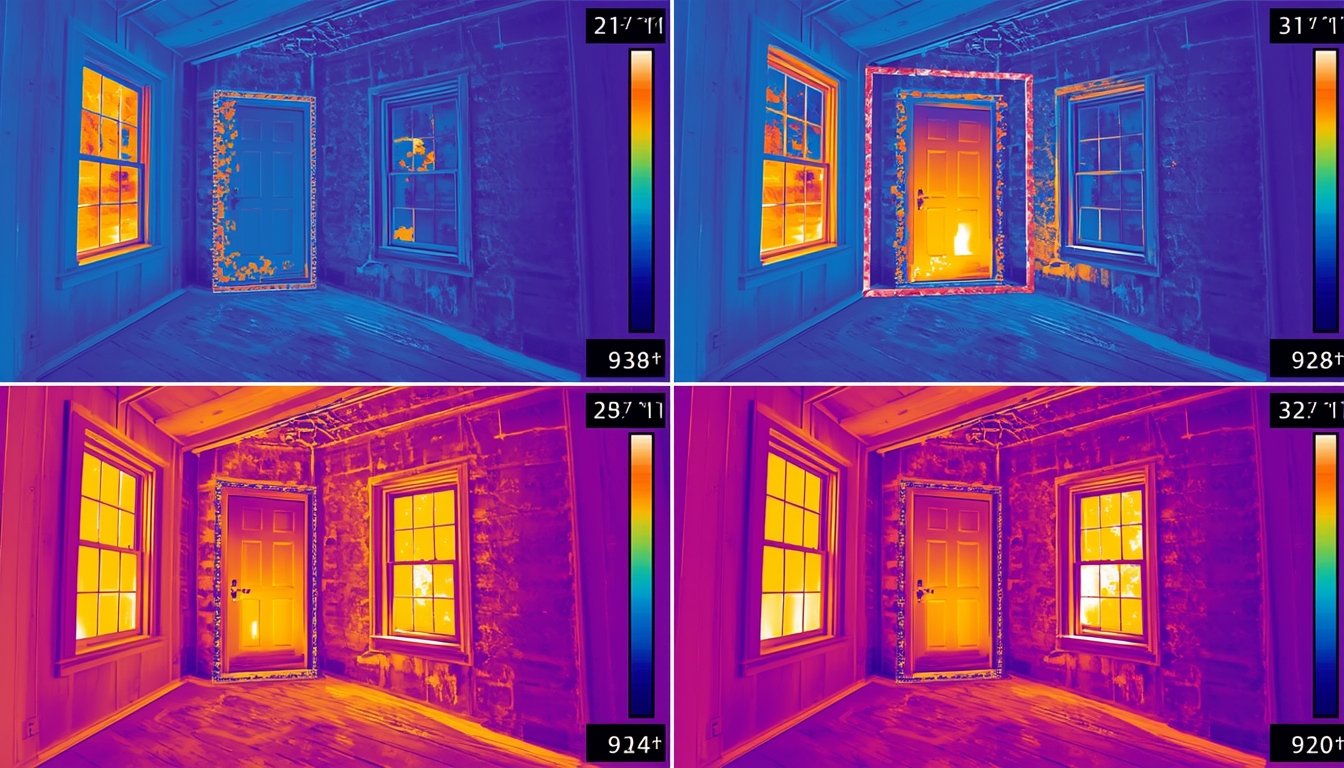
es, a thermal camera can help find insulation problems by detecting temperature differences on walls, ceilings, and floors. It does not show insulation directly, but it highlights areas where insulation is missing, uneven, or not performing properly.
How a thermal camera reveals insulation problems
Insulation works by slowing down heat transfer between inside and outside. When insulation is missing or poorly installed, heat moves more freely, creating temperature differences that a thermal camera can detect.
For example, in colder conditions, areas with poor insulation often appear cooler on interior walls because heat is escaping. In warmer conditions, those same areas may appear hotter as outside heat enters more easily.
These differences show up as patterns rather than single points. You might see vertical lines where wall studs are exposed, large patches where insulation is missing, or uneven areas where insulation has settled or been compressed.
The key is contrast. A thermal camera works best when there is a clear temperature difference between indoors and outdoors. Without that contrast, insulation problems may not be visible.
Understanding these patterns makes it easier to interpret what you are seeing. If you want a broader view of how these temperature differences are used, it helps to review how to detect heat loss in walls before scanning your home.
Common signs of insulation issues in thermal images
When scanning for insulation problems, you are looking for irregular temperature patterns that don’t match the structure of the wall or ceiling.
Typical signs include:
- Cold patches on walls during winter conditions
- Hot spots on ceilings during warmer weather
- Striped patterns showing framing with missing insulation between studs
- Uneven temperature distribution across the same surface
For example, if one section of a wall looks noticeably colder than the rest, it may indicate a gap or compression in the insulation. Similarly, consistent striping patterns can suggest insulation is missing between framing members.
It’s important to compare different areas of the house. A single irregularity might not mean much, but repeated patterns often indicate a real issue.
Also consider airflow. Air leaks can create similar temperature differences, so what looks like an insulation problem may actually be caused by drafts. This is why insulation and air sealing are often closely related when diagnosing heat loss.
How to confirm and act on insulation problems
Once a thermal scan highlights a potential issue, the next step is to confirm what is causing the temperature difference and decide what to do next.
After identifying a suspicious area:
- Check for drafts or air movement near the same location
- Inspect accessible areas like attics or crawl spaces for visible insulation gaps
- Look for areas where insulation may have shifted or settled over time
- Compare similar walls or ceilings to see if the issue is isolated
These checks help determine whether the problem is truly insulation-related or influenced by other factors like airflow or moisture.
If the issue is confirmed, solutions may include adding insulation, sealing air leaks, or improving ventilation. The goal is to restore consistent thermal performance across the surface.
Using a thermal camera allows you to focus on the exact areas that need attention, reducing guesswork and avoiding unnecessary work in unaffected parts of the home.