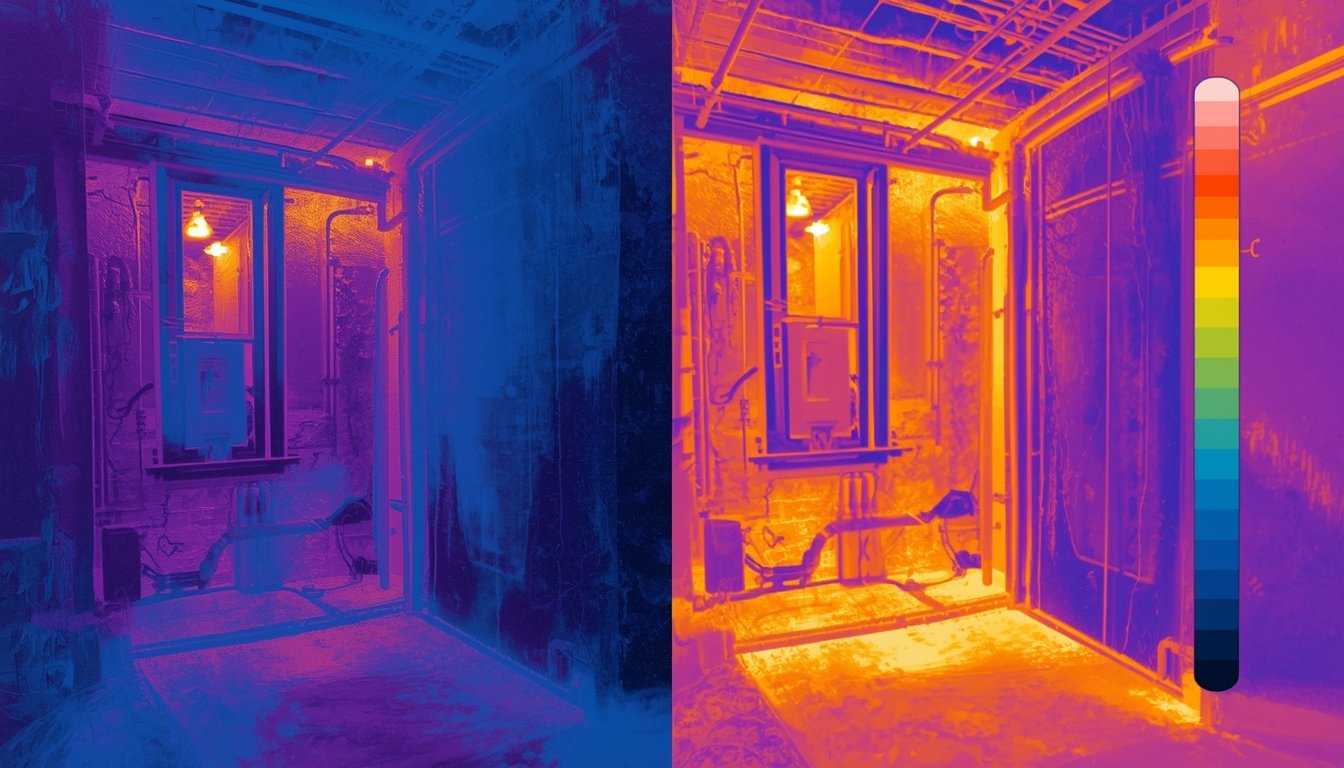
Yes, a thermal camera can help detect electrical problems by identifying unusual heat patterns on surfaces. It does not diagnose faults directly, but it can highlight overheating components, which are often early signs of electrical issues.
How a thermal camera identifies electrical problems
Electrical systems generate heat as they operate, but this heat should remain within a normal range. When something is wrong, such as a loose connection or overloaded circuit, components can overheat and create visible temperature differences.
A thermal camera detects these differences and displays them as hot spots. For example, a wire or breaker that is overheating may appear brighter or warmer than surrounding components in a thermal image.
Common causes of abnormal heat include poor connections, worn components, or circuits carrying more load than they should. These issues may not be visible during a standard inspection, but they often show clearly in thermal imaging.
However, it’s important to remember that the camera is detecting heat, not the specific fault. A hot spot indicates something is wrong, but further inspection is needed to identify the exact cause.
Understanding how these patterns appear can help you use the tool more effectively. If you are unsure how temperature differences form, it helps to review how a thermal camera works before interpreting results.
Common electrical issues visible in thermal scans
Thermal imaging is particularly useful for identifying problems that cause localized overheating. These issues can often be spotted early, before they lead to failure or safety risks.
Typical problems that may appear in a thermal scan include:
- Overloaded circuits causing wires to heat up
- Loose or corroded connections increasing resistance
- Faulty breakers or switches generating excess heat
- Imbalanced electrical loads across circuits
For example, a loose connection can create resistance, which generates heat as electricity passes through. This heat builds up over time and appears as a concentrated hot spot in a thermal image.
Similarly, an overloaded circuit may show a gradual increase in temperature along the wiring. This can indicate that the system is under strain and may need adjustment or repair.
These visual clues allow you to focus your attention on specific areas rather than checking the entire system blindly.
How to safely confirm and act on findings
If a thermal scan reveals a potential electrical issue, the next step is to confirm the problem safely and take appropriate action. Electrical systems can be dangerous, so caution is essential.
After identifying a hot spot:
- Avoid touching or disturbing the area while it is under load
- Check whether the issue is consistent over time
- Reduce load on the circuit if possible to see if temperature changes
- Consult a qualified electrician for inspection and repair
These steps help verify whether the issue is ongoing or temporary. For example, a component may heat up under heavy use but return to normal afterward, which may still require attention.
It’s also important to consider the environment. External heat sources or reflective surfaces can sometimes affect thermal readings, so results should always be interpreted carefully.
Using a thermal camera allows you to identify potential problems early, reducing the risk of failure or damage. But it should always be used as part of a broader inspection process, with professional input when needed.