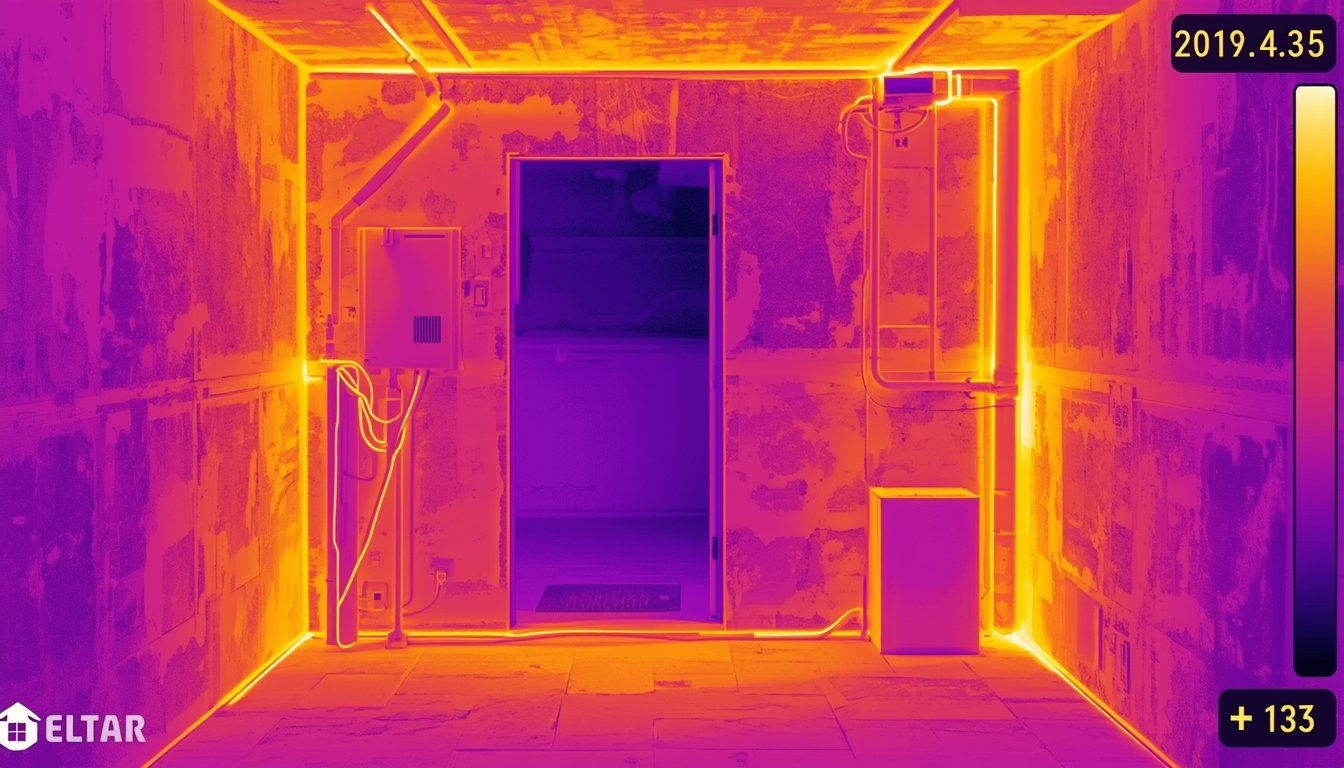
A thermal camera cannot directly detect termites or pests. It can only identify temperature differences on surfaces, which may sometimes indicate activity or conditions associated with pests, but it does not confirm their presence.
How thermal cameras can help identify possible pest activity
While thermal cameras do not see pests themselves, they can sometimes reveal patterns that suggest something unusual is happening inside walls or structures. This is usually related to heat differences caused by movement, nesting, or changes in materials.
For example, in certain conditions, pest activity may create small temperature variations. A cluster of insects or rodents in a confined space can slightly alter how heat is retained or dispersed, which may show up as a faint anomaly on a thermal scan.
In addition, damage caused by pests can affect insulation or airflow, which can create temperature differences. For instance, if termites have damaged wood or insulation, the affected area may behave differently thermally compared to the surrounding structure.
However, these signs are indirect. A thermal camera is showing a pattern, not the cause. That pattern could be due to insulation gaps, moisture, or airflow rather than pests.
If you’re trying to understand how these temperature patterns form, it helps to review how a thermal camera works before interpreting results.
When thermal imaging might indicate a pest problem
There are specific situations where thermal imaging may raise suspicion of pest activity, especially when combined with other signs.
You may notice:
- Small, irregular warm or cool patches that don’t match structural patterns
- Subtle movement in temperature patterns over time
- Areas where insulation performance seems inconsistent
- Unusual temperature differences in enclosed spaces
For example, a section of wall showing an irregular pattern that changes slightly over time could indicate activity inside the cavity. Similarly, if insulation appears disturbed in a way that doesn’t match construction patterns, it may be worth investigating further.
That said, these signs are not reliable on their own. Many non-pest-related issues can produce similar thermal patterns, including air leaks, moisture, or structural variations.
Thermal imaging should therefore be seen as a way to flag unusual areas, not diagnose pest problems.
How to confirm pests after a thermal scan
If a thermal scan highlights a suspicious area, the next step is to confirm whether pests are actually present. This requires direct inspection or additional evidence.
After identifying a potential issue:
- Listen for sounds such as scratching or movement inside walls
- Look for visible signs like droppings, damage, or entry points
- Check for hollow-sounding wood or structural changes
- Monitor the area over time for changes in activity
These checks help determine whether the issue is related to pests or something else. For example, a cold patch caused by an air leak will not produce the same signs as an active infestation.
If there is strong suspicion of pests, professional inspection is often the most reliable way to confirm the problem and determine the next steps.
A thermal camera can help narrow down where to look, but it should always be used alongside other methods to reach a clear and accurate conclusion.