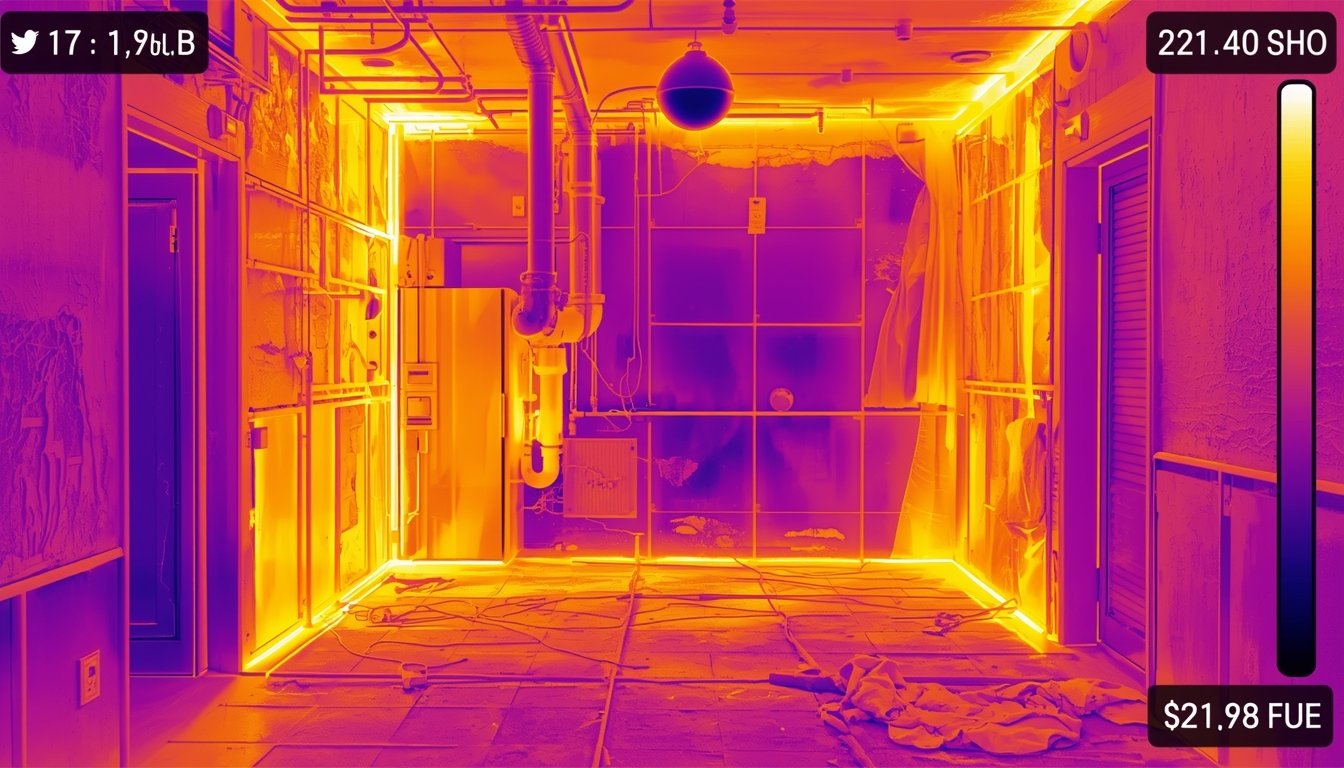
To scan a house with a thermal camera, you need to create a temperature difference, move slowly across surfaces, and look for consistent patterns rather than isolated spots. A proper scan helps you identify heat loss, moisture, air leaks, and system issues without opening walls.
How to prepare your home for an accurate scan
Before you start scanning, the most important step is creating the right conditions. Thermal cameras rely on temperature contrast, so without a difference between inside and outside, results will be limited.
Ideally, there should be at least a noticeable temperature gap between indoors and outdoors. This can be achieved by running heating or cooling systems before scanning. Early morning or evening often provides better conditions because temperatures are more stable.
Make sure windows and doors are closed, and allow the system to run long enough to create consistent conditions throughout the house. Sudden changes can produce misleading patterns that are harder to interpret.
Also, clear access to walls, ceilings, and floors where possible. Furniture and obstacles can block surfaces and prevent you from seeing the full picture. A clear view helps you identify patterns across entire areas rather than small sections.
If you are unsure whether conditions are suitable, it helps to understand the best conditions for using a thermal camera at home before starting.
How to scan rooms and surfaces effectively
When scanning, move slowly and methodically. Quick movements can cause you to miss important details, while a steady approach allows patterns to become more visible.
Start with exterior walls, as these are most likely to show heat loss or insulation issues. Then move to ceilings, floors, windows, and doors. Cover each surface evenly rather than focusing on one spot.
As you scan, look for:
- Cold or warm patches that stand out from surrounding areas
- Lines or patterns that follow structural features
- Streaks that may indicate air movement or drafts
- Irregular shapes suggesting moisture or insulation gaps
For example, a wall with missing insulation may show uneven temperature distribution, while a draft may appear as a streak near a window or door frame.
Try to compare similar areas. If one wall looks different from another under the same conditions, that difference is often worth investigating.
Consistency is key. A single unusual spot may not mean much, but repeated patterns across multiple areas often indicate a real issue.
How to interpret results and take next steps
Once you’ve completed the scan, the next step is to interpret what you’ve seen and decide what to do next. Thermal images provide clues, not final answers.
Start by reviewing areas where temperature differences were most noticeable. These are the places most likely to have underlying issues such as insulation gaps, air leaks, or moisture.
After identifying problem areas:
- Check for drafts or airflow in the same location
- Look for visible signs such as staining, gaps, or damage
- Compare with other rooms or surfaces to confirm patterns
- Monitor changes over time to see if the issue is consistent
These steps help confirm whether the thermal pattern represents a real problem or a temporary condition.
If the issue is clear, such as a draft or insulation gap, you can often take direct action. More complex problems, like hidden moisture or system faults, may require further inspection or professional help.
A thermal camera is most effective when used as part of a structured approach. By scanning carefully and following up on what you find, you can identify problems early and avoid unnecessary damage or guesswork.