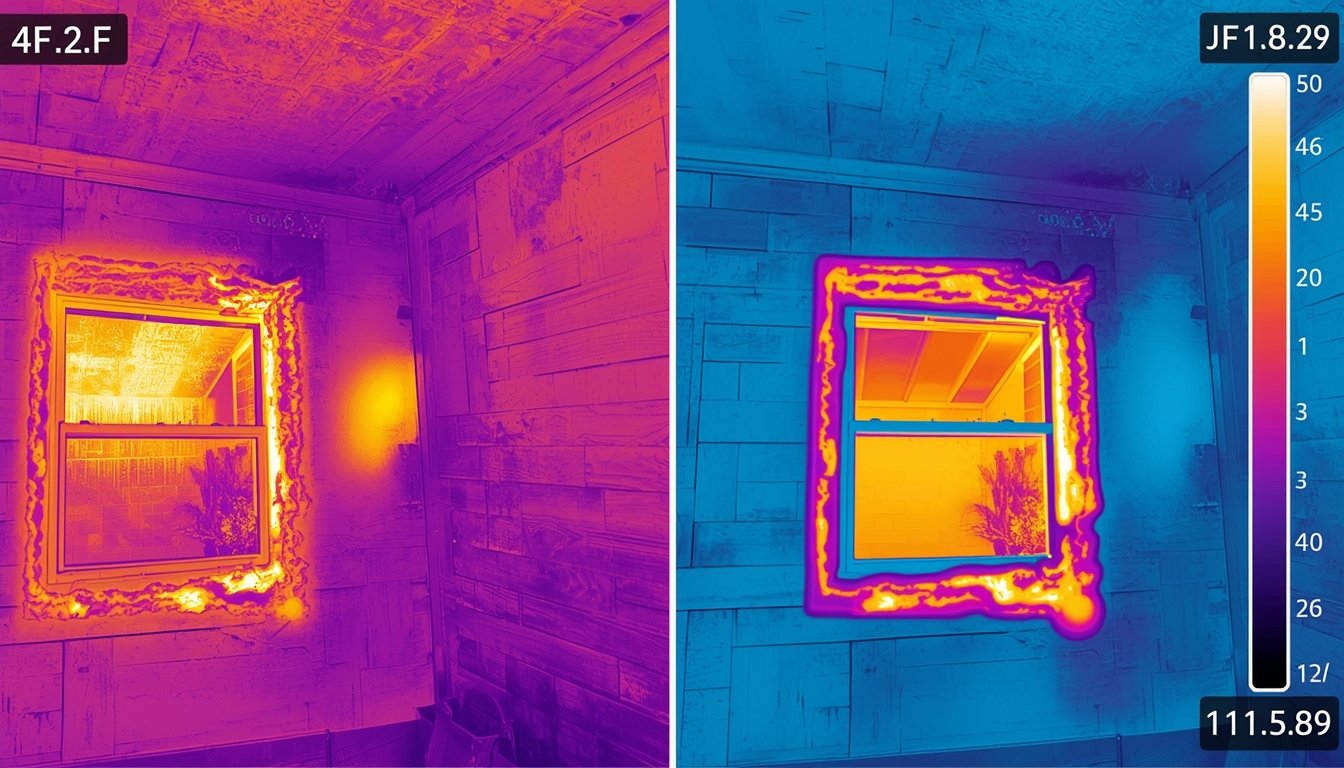
You can find drafts in your home by checking for air movement around common leak points, using simple tools like your hand or paper, and confirming problem areas with a thermal camera. The goal is to identify where outside air is entering so you can seal those gaps and improve comfort.
How to detect drafts using simple methods
You don’t need specialised equipment to find many drafts. In fact, some of the most effective checks are quick and can be done during normal daily conditions, especially when it’s cold or windy outside.
Start by moving your hand slowly around windows, doors, and wall edges. Pay close attention to corners and joints, as these are common leak points. If you feel a noticeable change in temperature or airflow, that’s a strong sign of a draft.
Another simple method is to use a thin piece of tissue or paper. Hold it near suspected areas and watch for movement. Even a slight flutter can indicate air entering or escaping.
You should also look for indirect signs. Curtains moving slightly when windows are closed, uneven room temperatures, or areas that feel consistently colder can all point to hidden drafts.
These methods are useful for finding obvious issues, but smaller leaks can still go unnoticed. That’s where more precise tools can help confirm what’s really happening.
Using a thermal camera to locate hidden drafts
A thermal camera is one of the most effective ways to find drafts because it visually shows temperature differences caused by air movement. Instead of relying on feel, you can clearly see where cold or warm air is affecting surfaces.
When scanning your home, drafts often appear as streaks or patches that differ from the surrounding temperature. For example, in colder conditions, incoming air may create cooler lines along walls, floors, or around fixtures.
Typical thermal patterns linked to drafts include:
- Cold streaks near windows, doors, and baseboards
- Uneven temperature patterns along walls or ceilings
- Cool spots near electrical outlets or vents
- Irregular temperature changes at joints or seams
These patterns help you pinpoint exact locations of air leaks, even if they are too small to detect by touch. This is especially useful in larger homes where multiple small drafts can add up.
To get accurate results, there needs to be a temperature difference between inside and outside. Without that contrast, thermal imaging may not clearly show airflow patterns. If you’re unsure when to scan, it helps to review the best conditions for using a thermal camera at home before starting.
How to confirm and fix draft problems
Once you’ve identified where drafts are likely coming from, the next step is to confirm the source and decide how to fix it. This helps avoid unnecessary work and ensures you address the real issue.
After locating a draft:
- Inspect seals and weatherstripping for wear or gaps
- Check for cracks in walls, trim, or around fittings
- Look at joints where different materials meet, such as window frames and walls
- Temporarily seal the area and see if the draft improves
These checks help determine whether the problem is caused by worn materials, poor sealing, or structural gaps.
Fixes can range from simple solutions like replacing weatherstripping or applying sealant, to more involved repairs if the issue is related to installation or structural movement.
By identifying drafts accurately first, you can focus your efforts where they will have the most impact, improving comfort and reducing energy loss throughout your home.