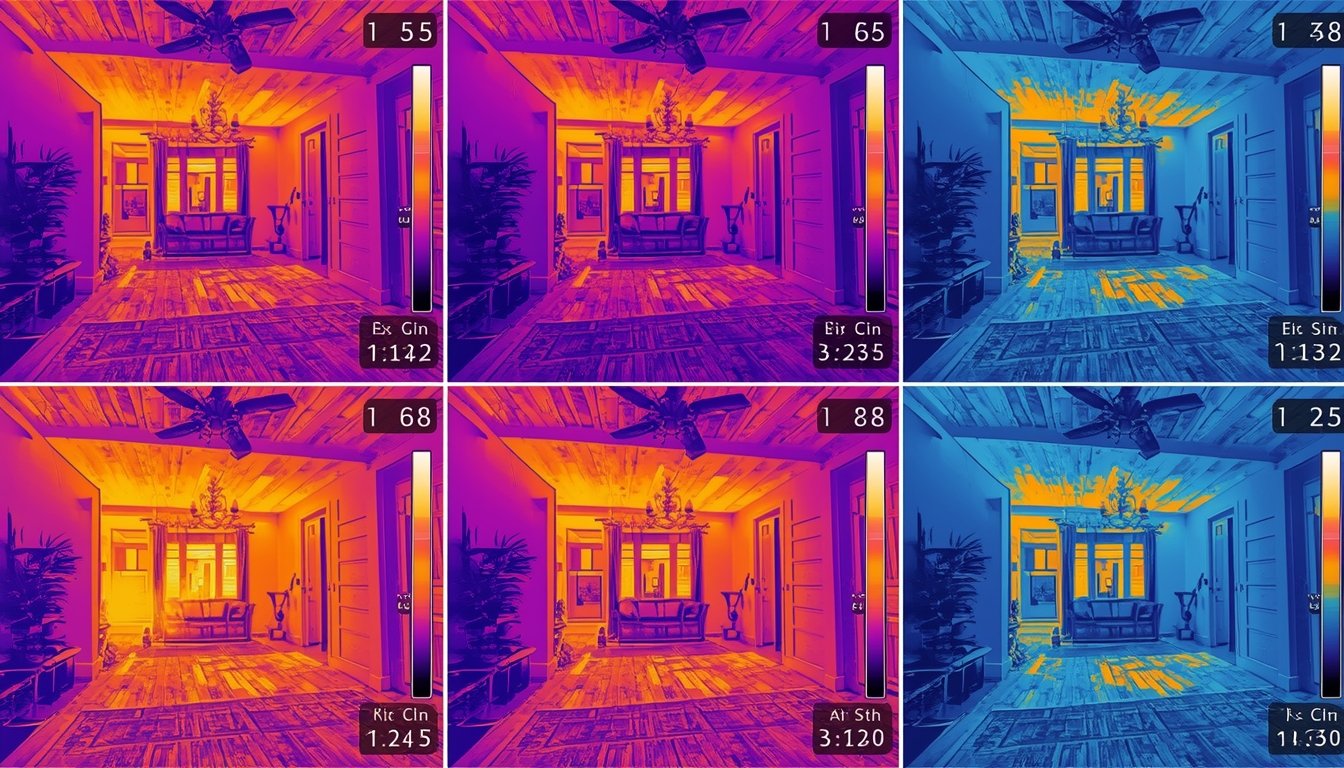
You do not strictly need a thermal camera for home maintenance, but it can be a highly useful tool for identifying hidden issues early. It is most valuable when you want to detect problems like heat loss, moisture, or airflow that are not visible during a standard inspection.
When a thermal camera is useful for home maintenance
- When you suspect hidden problems behind walls or ceilings
- When rooms feel uneven in temperature without an obvious cause
- When you want to detect moisture before visible damage appears
- When trying to improve energy efficiency in your home
- When troubleshooting HVAC or airflow issues
A thermal camera is most useful when something feels off but you cannot see the cause. For example, if a room is consistently colder than the rest of the house, a thermal scan can help identify whether the issue is insulation, air leakage, or system imbalance.
It is also valuable for early detection. Many problems, such as leaks or insulation gaps, develop before they become visible. Thermal imaging allows you to identify these issues sooner, which can help prevent more serious damage.
Another advantage is speed. Instead of checking multiple areas manually, you can scan entire surfaces and quickly identify where temperature differences exist.
However, the value depends on how often you encounter these types of problems. For occasional maintenance, it may not always be necessary.
When you don’t need a thermal camera
- When issues are already clearly visible
- When performing routine or basic maintenance tasks
- When there is no temperature difference to detect
- When you can identify the problem through simple checks
In many situations, a thermal camera is not required. If you can already see the problem, such as water stains, cracks, or obvious drafts, additional tools may not provide much extra value.
Routine maintenance tasks, such as cleaning gutters, checking seals, or inspecting visible areas, can usually be done without specialised equipment.
Thermal cameras also depend on conditions. Without a temperature difference, they will not produce useful results. This makes them less practical for general use without a specific purpose.
For many homeowners, traditional inspection methods combined with basic tools are sufficient for day-to-day maintenance.
How a thermal camera compares to standard inspection methods
Standard inspection methods rely on visual checks, touch, and basic tools. These approaches are effective for identifying visible issues and confirming obvious problems.
A thermal camera adds a different layer of information. It reveals temperature differences that cannot be seen or felt easily, allowing you to detect hidden issues.
For example, a wall may look normal during a visual inspection, but a thermal scan could reveal a cold patch indicating heat loss or moisture. This provides insight that would otherwise be missed.
However, thermal imaging does not replace standard inspection. It complements it. Visual checks are still necessary to confirm findings and understand the context of what you are seeing.
Using both methods together provides the most complete assessment. Visual inspection identifies visible issues, while thermal imaging helps uncover hidden ones.
If you want to understand how thermal imaging fits into this process, it helps to review how to use a thermal camera for home inspection before deciding whether to rely on it.
Costs and practicality for homeowners
One of the main considerations is whether the cost and effort of using a thermal camera are justified for your needs.
Thermal cameras range in price from relatively affordable consumer models to more advanced professional devices. While entry-level options are accessible, higher-quality cameras provide better resolution and more accurate results.
For occasional use, purchasing a thermal camera may not always make sense. In many cases, renting a device or hiring a professional inspection can be more cost-effective.
It’s also important to consider how often you will use it. If you regularly work on home improvement projects or want to monitor your home’s performance, owning a thermal camera can provide ongoing value.
On the other hand, if you only need it for a single issue, the investment may not be justified.
Balancing cost with expected use helps determine whether it is a practical tool for your situation.
How to decide if a thermal camera is worth it for you
Deciding whether you need a thermal camera comes down to how you approach home maintenance and the types of problems you are dealing with.
If you prefer a proactive approach and want to identify issues early, a thermal camera can be a valuable addition to your toolkit. It allows you to detect problems before they become visible and take action sooner.
If you mainly respond to issues as they appear, traditional inspection methods may be sufficient. In this case, a thermal camera may not add significant value.
Consider the types of problems you are most likely to encounter. Homes with insulation challenges, older construction, or recurring moisture issues may benefit more from thermal imaging.
It is also worth considering your level of comfort with using the tool. Interpreting thermal images requires some understanding, and without it, the results may be confusing or misleading.
By evaluating your needs and how you maintain your home, you can decide whether a thermal camera is a worthwhile investment.
Using a thermal camera as part of a maintenance strategy
A thermal camera is most effective when used as part of a broader maintenance strategy rather than as a standalone solution.
It can be used periodically to check for developing issues, especially in areas that are difficult to inspect visually. For example, scanning walls, ceilings, and floors can help identify changes over time.
It is also useful for verifying repairs. After fixing a leak or improving insulation, a thermal scan can confirm whether the issue has been resolved.
However, it should always be combined with other methods. Visual inspection, physical checks, and additional tools are necessary to confirm findings and ensure accurate diagnosis.
By integrating thermal imaging into your overall approach, you can improve the efficiency and effectiveness of your home maintenance routine.