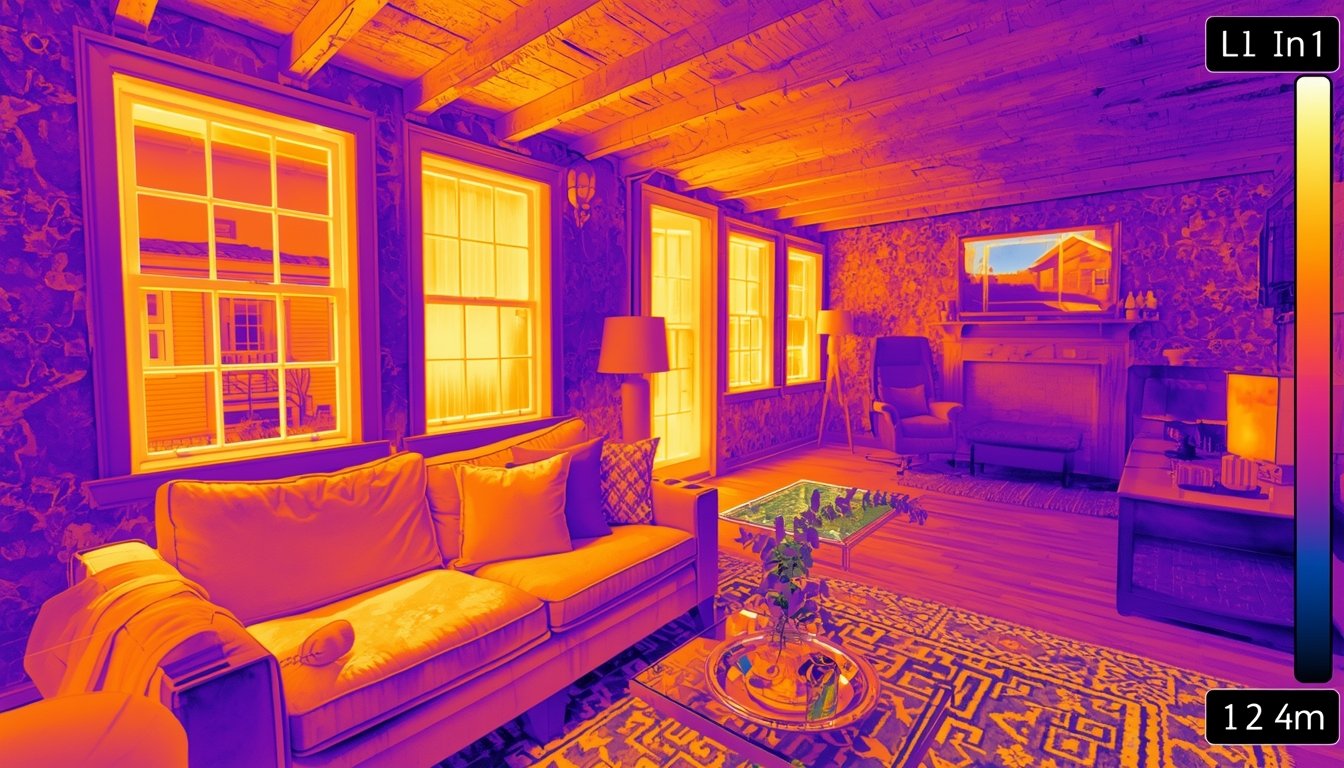
You can detect heat loss in walls by identifying areas where temperature differs from the surrounding surface, either by touch, visual signs, or more accurately with a thermal camera. These differences usually indicate insulation gaps, air leaks, or materials allowing heat to escape.
How to identify heat loss without specialised tools
You can often detect basic heat loss issues using simple checks before relying on equipment. While these methods are less precise, they can help confirm whether a problem exists.
Start by paying attention to how the wall feels. On colder days, sections of wall that feel noticeably cooler than others may indicate heat escaping through that area. This is especially common near corners, windows, or exterior-facing walls.
You should also look for visible signs such as uneven condensation, slight discoloration, or areas where paint or plaster behaves differently. These can suggest temperature variation caused by heat loss.
Another useful method is observing how rooms behave. If one section of a room consistently feels colder, or if heating struggles to maintain temperature in a specific area, this may point to heat escaping through nearby walls.
While these checks can highlight potential issues, they don’t show the full picture. Heat loss often occurs in patterns that are difficult to detect by touch or sight alone, which is why more accurate tools are often needed.
Using a thermal camera to detect heat loss
A thermal camera is one of the most effective ways to detect heat loss because it clearly shows temperature differences across wall surfaces. Instead of guessing, you can see exactly where heat is escaping.
When scanning a wall, areas of heat loss usually appear as cooler patches compared to surrounding surfaces. These may be large irregular shapes or consistent patterns depending on the cause.
Common thermal patterns linked to heat loss include:
- Cold patches indicating missing or damaged insulation
- Vertical or horizontal lines showing structural framing
- Streaks caused by air leaks or drafts
- Uneven temperature distribution across the same wall
For example, if insulation is missing between studs, you may see alternating warm and cool stripes. If air is leaking through gaps, you might notice streaks or concentrated cold areas near joints or openings.
To get accurate results, you need a temperature difference between indoors and outdoors. Without this contrast, the thermal image may not clearly show heat loss patterns. This is why timing and conditions are important when using a thermal camera.
How to confirm and fix heat loss issues
Once you’ve identified areas where heat loss may be occurring, the next step is to confirm the cause and decide how to address it. Different issues require different solutions.
After locating a problem area:
- Check for drafts around the same location, especially near edges and joints
- Inspect accessible areas like attics for insulation gaps above the wall
- Look for signs of moisture, which can affect thermal performance
- Compare similar walls to see if the issue is isolated or widespread
These checks help determine whether the problem is caused by insulation, airflow, or another factor. For example, a cold patch caused by missing insulation will behave differently from one caused by air leakage.
If you confirm heat loss, solutions may include adding insulation, sealing gaps, or improving airflow control. The goal is to create a consistent barrier that reduces temperature differences across the wall.
If you are unsure what the thermal patterns mean, it helps to review how thermal cameras find insulation problems to better interpret what you are seeing.