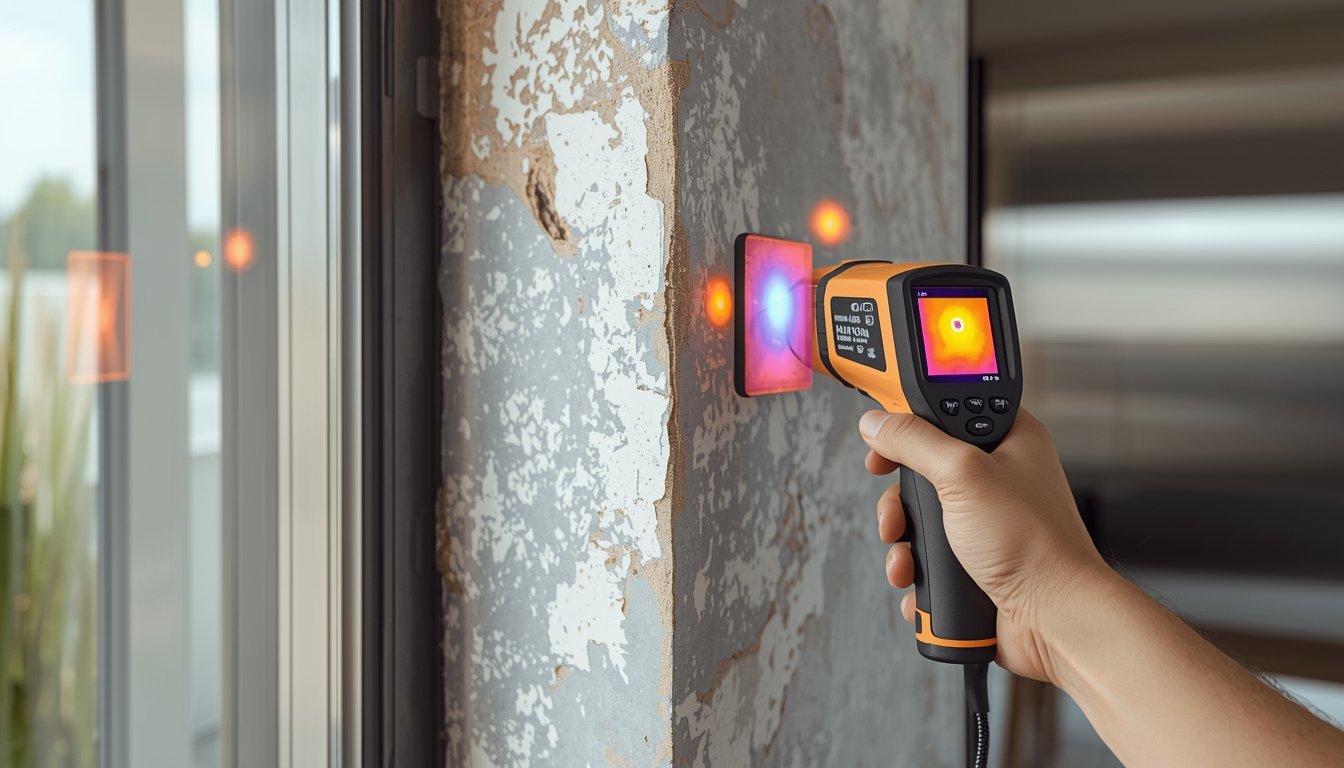
Yes, thermal cameras can give false or misleading readings. In home use, this usually happens when the camera is affected by reflective surfaces, poor conditions, incorrect settings, or normal temperature differences that are interpreted as a problem when they are not.
How It Works
A thermal camera detects infrared energy from a surface and turns it into an image showing warmer and cooler areas. It is reading the surface temperature pattern it can see, not directly identifying what is causing that pattern.
That means a thermal image always needs interpretation. A temperature difference may be real, but the reason behind it is not always obvious from the image alone.
What It Can Do
Even with this limitation, thermal cameras can still be useful for home inspections when they are used carefully.
- Show unusual hot or cold spots on walls and ceilings
- Highlight possible heat loss around windows and doors
- Help compare insulation performance in different areas
- Show temperature differences around ducts, vents, and equipment
- Point to areas that may need closer inspection
Limitations / What It Cannot Do
A thermal camera cannot confirm that every unusual image is a real fault. Reflective materials such as glass, metal, and glossy surfaces can make a camera display temperatures that are influenced by surrounding heat sources rather than the surface itself.
It also cannot tell the exact cause of a temperature difference. A cool patch may be related to air leakage, missing insulation, moisture, or simply a normal change in building materials. The image alone does not prove which explanation is correct.
Incorrect settings can also create misleading results. If the camera is not focused properly, or if the viewing angle is poor, the image may be less reliable. Low temperature contrast between areas can also make patterns harder to interpret accurately.
Another limitation is user expectation. A thermal image may look precise, but it is still only showing a visual temperature pattern. It should be treated as a screening tool rather than a final diagnosis.
When It Works Best
Thermal cameras work best when there is a clear temperature difference between the area being checked and the surrounding surfaces. This helps real patterns stand out more clearly.
They are usually most useful when scanning broad surfaces such as walls, ceilings, floors, windows, and duct runs, and when the user compares multiple areas rather than relying on one image by itself.
Common Misconceptions
A common misconception is that a thermal camera always shows exact truth. In reality, it shows temperature patterns that still need to be interpreted correctly.
Another misconception is that every hot or cold area means damage. Some patterns are normal and may simply reflect surface type, air movement, or reflections.
People also often assume false readings mean the camera is defective. In many cases, the issue is not the camera itself but the surface, conditions, or the way the image is being read.
Final Answer Summary
Thermal cameras can give false or misleading readings, especially on reflective surfaces, in poor scanning conditions, or when normal temperature differences are mistaken for faults. They are useful for identifying areas that may need more attention, but they should not be treated as a complete diagnostic answer on their own.