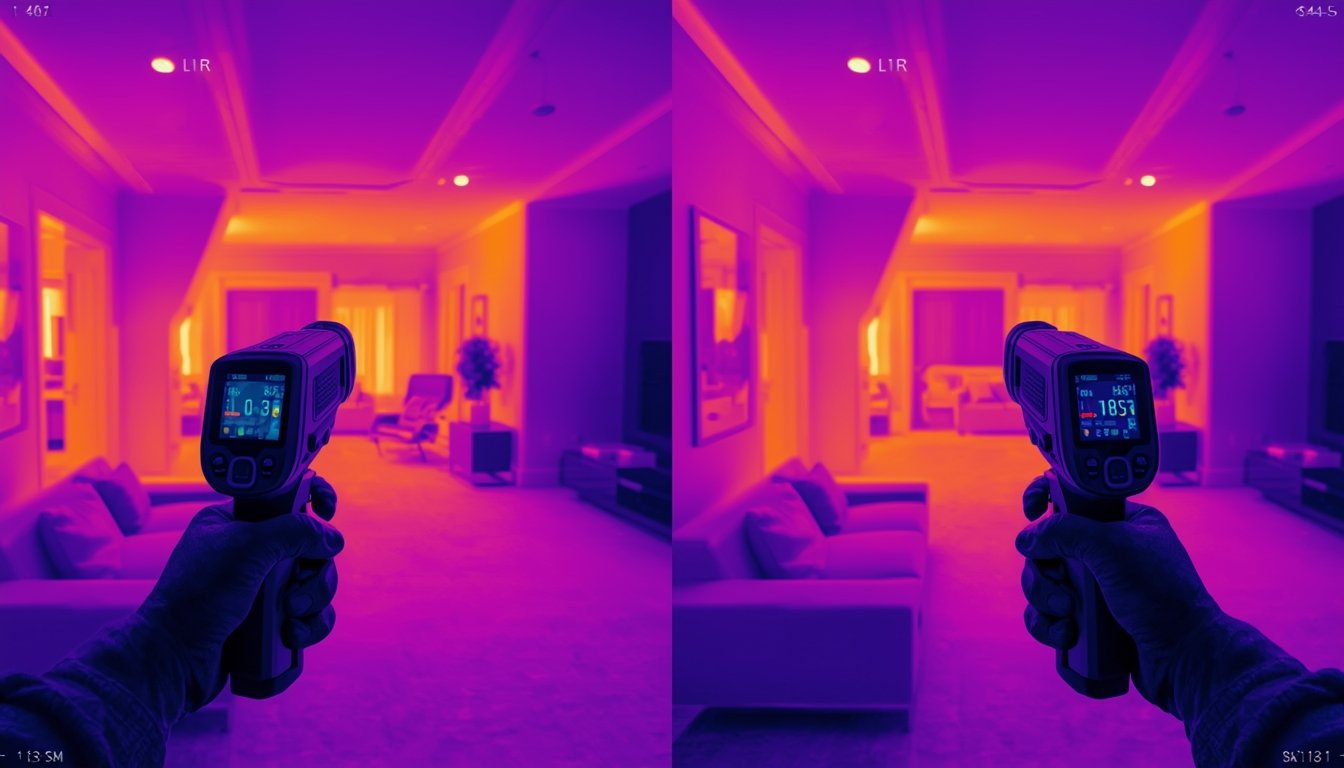
No, a thermal camera cannot see through walls. It only detects temperature differences on the surface of a wall, which can sometimes reveal patterns caused by what’s happening behind it, but it does not show objects or details inside the wall itself.
Why thermal cameras cannot see through walls
A thermal camera works by measuring infrared radiation (heat) emitted from surfaces. When you point it at a wall, it only reads the temperature of the wall’s outer surface, not what is behind it.
Walls are solid barriers that block direct heat transfer from internal objects. While some heat can move through materials, it becomes diffused and indirect by the time it reaches the surface. This means the camera only captures a general temperature pattern, not a clear image of anything inside.
For example, if there is a pipe behind a wall carrying warm water, the wall surface above it may appear slightly warmer. However, you won’t see the pipe itself — only a faint temperature difference that suggests something is there.
This is why thermal imaging is often misunderstood. It can make hidden issues easier to detect, but it does not function like X-ray vision or allow you to see through solid materials.
What thermal cameras can reveal instead
Even though thermal cameras cannot see through walls, they are still very effective at highlighting problems that affect surface temperature.
They can help reveal:
- Insulation gaps causing uneven wall temperatures
- Air leaks creating cold or warm streaks
- Moisture buildup that cools surrounding areas
- Electrical hotspots that warm nearby surfaces
These patterns are often enough to guide further investigation. For instance, if you notice a vertical warm line on a wall, it may indicate a pipe. If you see irregular cold patches, it could suggest missing insulation or drafts.
The key is interpretation. The thermal image shows clues, not answers. To use it effectively, you need to understand what temperature differences might represent in a real-world context. If you want a broader view of how these patterns are used, it helps to look at what a thermal camera can detect in a house.
In many cases, these visual clues can save time by narrowing down where to inspect further, especially when dealing with hidden issues.
When thermal imaging is useful for wall inspections
Thermal imaging is most useful when there is a clear temperature difference between materials or areas. Without contrast, the camera will not show meaningful detail.
It works best in situations such as:
- Cold outdoor temperatures creating contrast with indoor heating
- Active leaks or moisture affecting wall temperature
- Heating systems running behind walls or floors
- Air movement causing noticeable temperature variation
For example, checking insulation during winter often produces clearer results because the temperature difference between inside and outside is greater. This contrast makes missing insulation or drafts easier to spot.
However, in stable conditions where temperatures are uniform, a thermal camera may show very little. This can lead to false assumptions if you expect it to reveal hidden structures directly.
Used correctly, thermal imaging is a powerful diagnostic tool — but only when you understand its limitations. It helps you identify where something might be wrong, not exactly what is behind the wall.