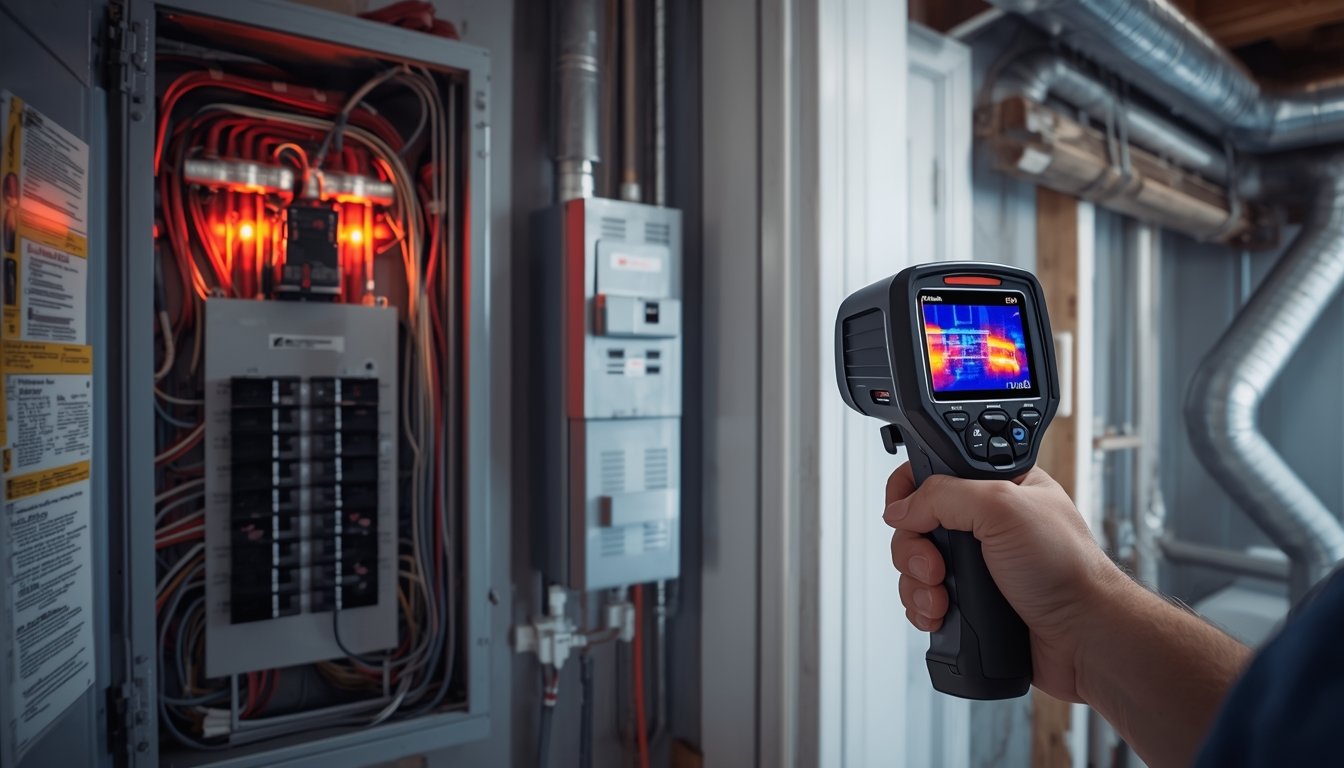
When a thermal camera is used for HVAC and electrical issues, the aim is usually to identify unusual hot or cold patterns that may point to airflow problems, heat loss around ducts, hot electrical components, overloaded connections, or inconsistent system performance. For this kind of work, a practical home-use model should be easy to carry, quick to read, and suitable for repeated checks around vents, panels, duct runs, and service areas.
Quick Picks
- Best overall for HVAC and electrical issues: FLIR C5 Compact Thermal Camera
- Best for quick checks around vents and visible components: Flir One – Thermal Imaging Camera for iOS Smartphones
- Best for wider HVAC walkthroughs and service-area scanning: TOPDON TC005 3.5″ Dual-Lens Thermal Imaging Camera
- Best for more detailed diagnostic work: FLIR E6-XT – Commercial Thermal Imaging Camera with Wifi
Flir One – Thermal Imaging Camera for iOS Smartphones
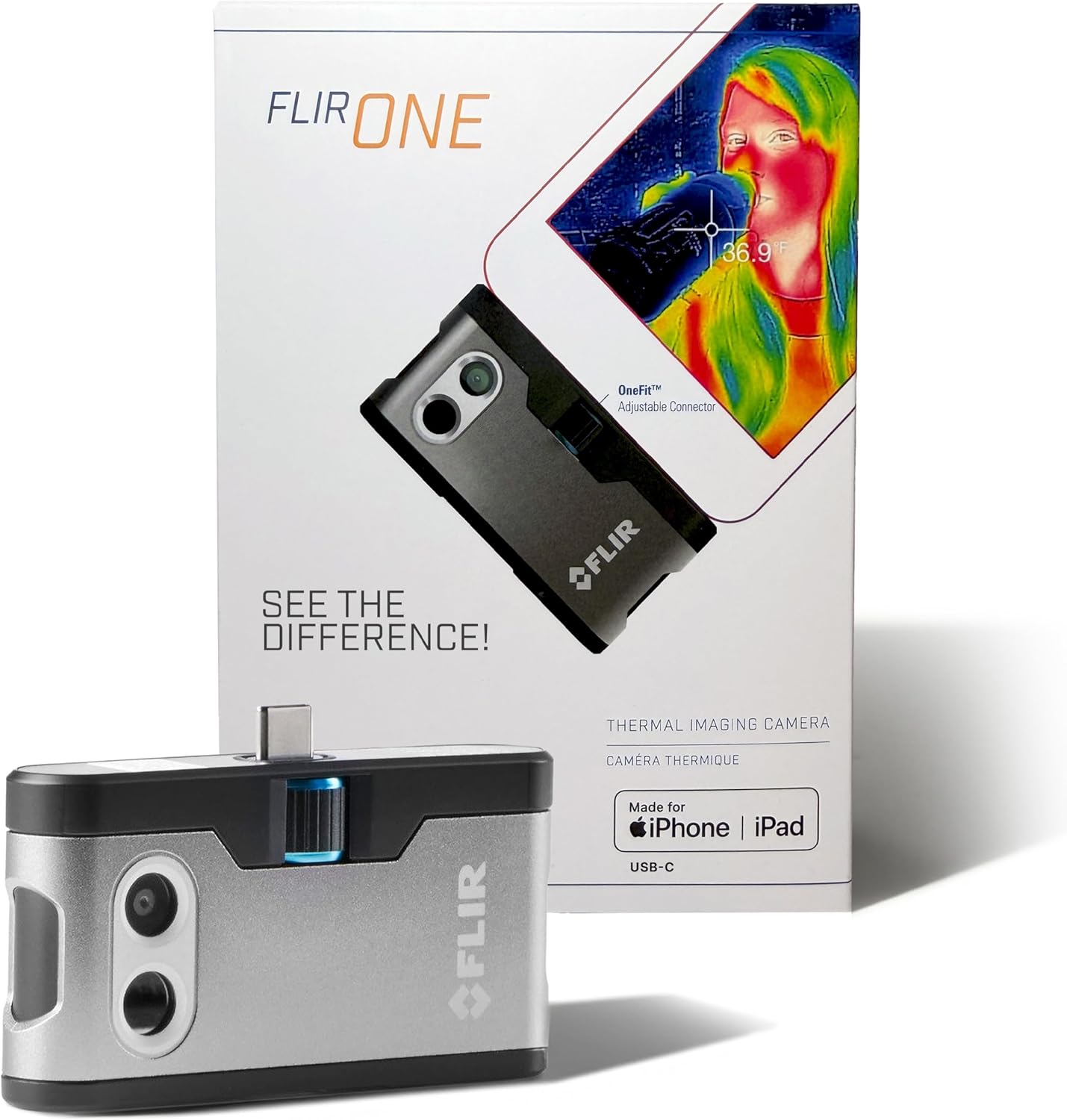
A phone-based thermal camera that can be used for simple checks around vents, duct openings, appliance areas, and visible electrical components.
This is best suited to occasional use when you want to check for obvious temperature differences around supply vents, return paths, or accessible electrical areas. It can be a practical starting point, but it is less convenient for repeated walkthroughs or broader system checks.
Best for: iPhone users who want a lower-cost way to investigate basic HVAC and electrical concerns.
Advantage: Lower entry cost for occasional targeted checks.
Limitation: Less practical than a dedicated handheld model for broader or repeat troubleshooting.
TOPDON TC005 3.5″ Dual-Lens Thermal Imaging Camera

A standalone handheld thermal camera that is more practical for scanning vents, ducts, equipment areas, and several parts of the home in one session.
This is a more suitable option when you want to move room to room and compare different HVAC and electrical areas without relying on a phone. A dedicated handheld device is usually easier to use for this sort of home troubleshooting.
Best for: Homeowners who want a dedicated handheld camera for broader HVAC and electrical checks.
Advantage: Easier to use for repeat scanning across multiple service areas.
Limitation: More expensive than a basic phone attachment.
FLIR C5 Compact Thermal Camera
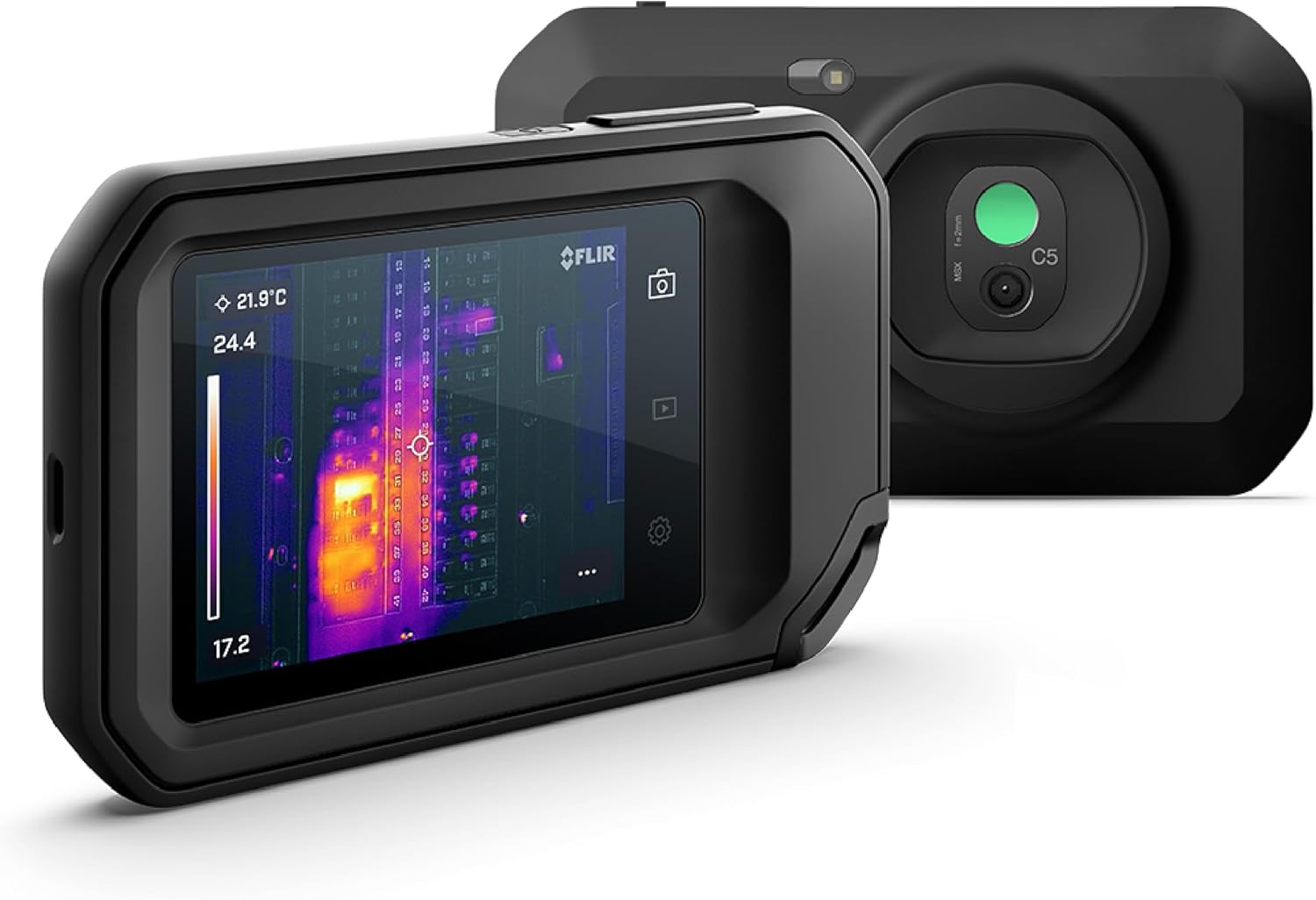
A compact handheld option that fits the strongest all-round position for checking home HVAC performance and investigating unusual electrical hot spots.
This is the most balanced option for most homeowners because it is practical enough for repeated use while still being easy to carry and store. It suits the kind of troubleshooting many home users actually do, including vent checks, duct temperature comparisons, and identifying suspicious hot or cold patterns around accessible systems.
Best for: Homeowners who want one thermal camera that can handle most HVAC and electrical issue checks well.
Advantage: Strong balance between convenience and practical repeated troubleshooting use.
Limitation: Higher price than entry-level options.
FLIR E6-XT – Commercial Thermal Imaging Camera with Wifi

A higher-end thermal camera for buyers who want more detailed diagnostics around electrical panels, duct runs, equipment spaces, and larger home systems.
This makes more sense when you want stronger long-term capability for more serious troubleshooting. It is better suited to buyers who expect to do repeated system checks, compare larger areas, or look more closely at performance differences around HVAC and electrical equipment.
Best for: More detailed HVAC and electrical diagnostics in larger or more complex home setups.
Advantage: Better suited to deeper diagnostic work and broader system analysis.
Limitation: Price is higher than many homeowners need for occasional checks.
How to Choose
- For HVAC and electrical issues, think about whether you are doing quick spot checks or broader troubleshooting across several rooms or service areas.
- If you only want to inspect a few obvious areas occasionally, a phone attachment may be enough.
- If you plan to compare vents, ducts, utility spaces, or accessible electrical points regularly, a dedicated handheld camera is usually more practical.
- A compact handheld model often gives the best balance for general home HVAC and electrical troubleshooting.
- Higher-end models make more sense when you want more detailed diagnostics or expect to use the camera more seriously over time.
Final Recommendation
The FLIR C5 is the strongest overall thermal camera for HVAC and electrical issues because it offers the most practical balance for repeated home troubleshooting, broader room-to-room checks, and general system inspection work. It is more convenient than a phone attachment for regular use, but it does not push as far into premium pricing as the FLIR E6-XT. The TOPDON TC005 is a good dedicated handheld option if you want a more moderate step up, while the Flir One is better suited to occasional targeted checks. The FLIR E6-XT makes more sense when you want a more advanced tool for larger homes or more detailed diagnostic work.