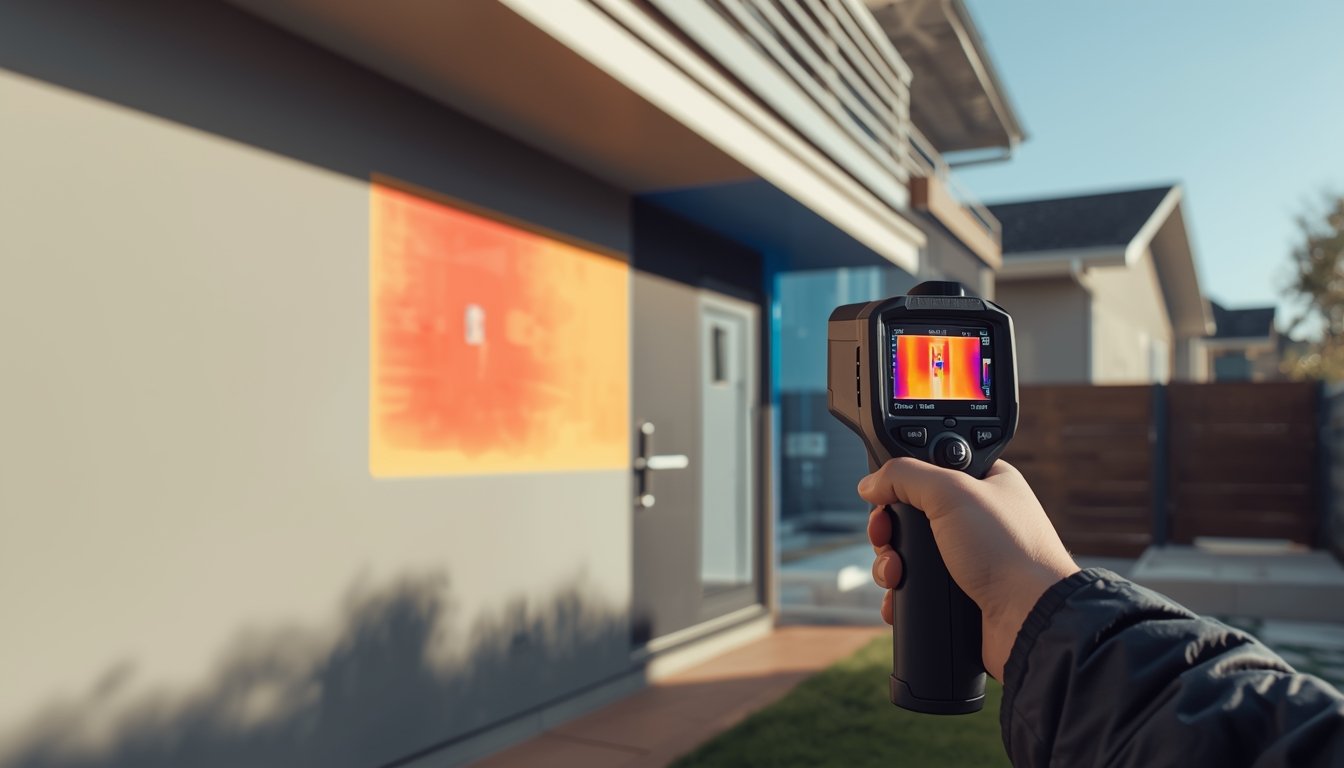
Yes, weather can affect thermal camera accuracy. Outdoor temperature, wind, rain, direct sunlight, and recent weather changes can all alter how surfaces appear on a thermal image, which can make some patterns easier or harder to interpret correctly.
How It Works
A thermal camera reads infrared energy from a surface and turns it into an image showing warmer and cooler areas. In a house, that means it is reading the temperature pattern on the outside of a wall, roof, window, or other surface at the time of scanning.
Because weather changes surface temperature, it can also change what the camera shows. The image may still be useful, but the conditions can affect how clear or reliable the pattern appears.
What It Can Do
Even when weather affects conditions, a thermal camera can still be useful for home inspections when it is used carefully.
- Show temperature differences on walls, roofs, windows, and doors
- Help identify unusual heat loss or cold spots
- Highlight areas that may need closer checking
- Help compare one part of a surface to another
- Support inspections when conditions create enough thermal contrast
Limitations / What It Cannot Do
Weather can make thermal images harder to interpret. Direct sunlight can heat a surface unevenly, which may hide or distort patterns related to insulation or moisture. A wall that has been in strong sun may appear warm for reasons unrelated to a building problem.
Wind can also affect results by cooling surfaces and reducing the stability of surface temperatures. Rain, recent moisture, or surface evaporation may create unusual cooling patterns that look significant but do not always point to the exact underlying issue.
Cloud cover and recent weather shifts can also matter. If surfaces have recently warmed or cooled quickly, the image may reflect those short-term changes rather than a clear building-related pattern. This means a thermal camera cannot separate weather effects from building problems on its own.
For that reason, weather can reduce accuracy if the user assumes every visible pattern is caused by the structure itself. The thermal image still needs context and careful interpretation.
When It Works Best
Thermal cameras usually work best when there is a steady and noticeable temperature difference between areas being compared. Stable conditions often make it easier to see useful patterns on walls, ceilings, windows, and roofs.
They are generally more useful when surfaces are not being heavily influenced by direct sun, strong wind, or recent rain. Consistent conditions make comparison easier and reduce the chance of short-term weather effects dominating the image.
Common Misconceptions
A common misconception is that a thermal camera works the same way in all weather. In reality, weather can change how surfaces heat up, cool down, and retain temperature, which can affect the image.
Another misconception is that bad weather makes thermal imaging useless. That is not always true. The camera can still provide useful information, but the results may be less clear and may need more cautious interpretation.
Some people also assume that a strong pattern on a thermal image always points to a structural problem. Weather can sometimes create temporary patterns that look important even when they are not caused by insulation, moisture, or defects.
Final Answer Summary
Yes, weather does affect thermal camera accuracy because it changes surface temperatures and can influence what the camera shows. Thermal imaging is usually most reliable when conditions are stable and surfaces are not being strongly affected by sun, wind, rain, or recent weather changes.