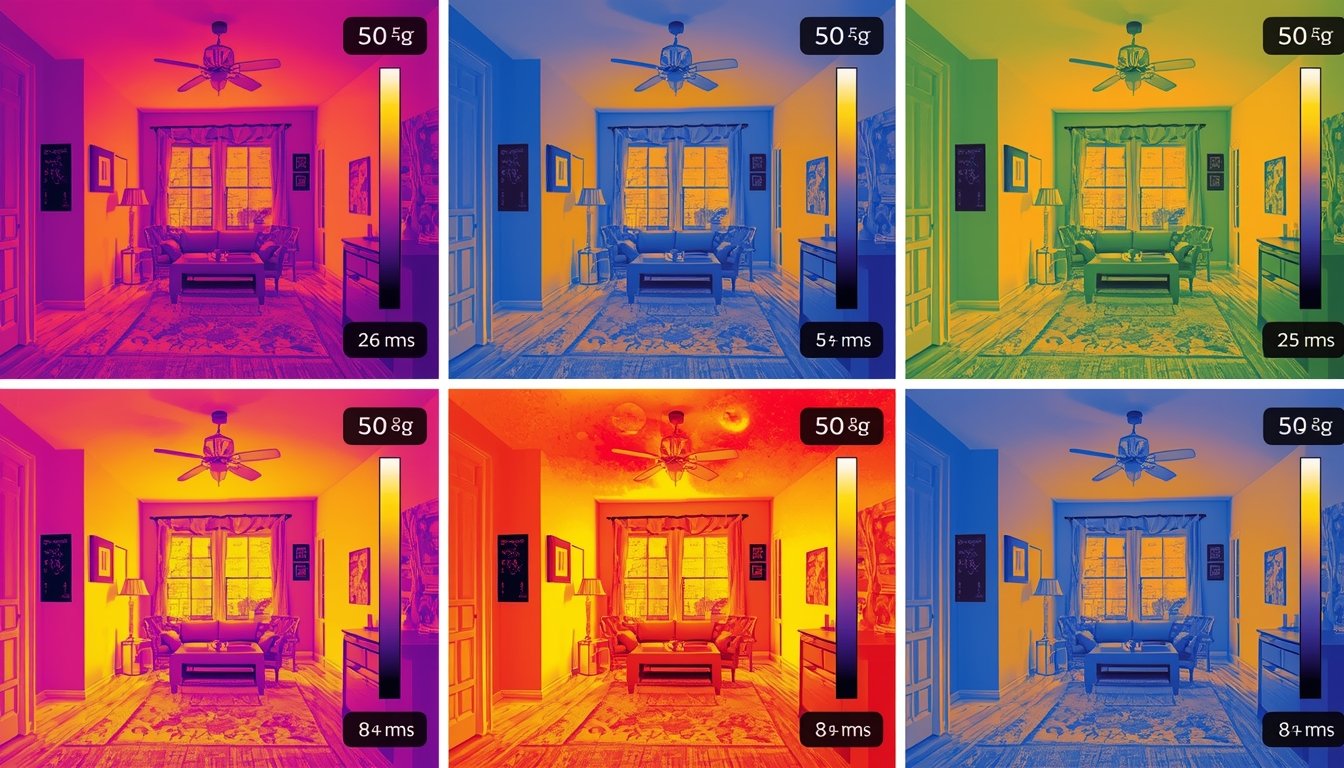
A thermal camera and visual inspection serve different roles in home assessment. A thermal camera reveals hidden temperature differences that point to issues behind surfaces, while visual inspection identifies visible damage, wear, or structural problems. Used together, they provide a more complete and accurate understanding of what is happening in a home.
How thermal cameras and visual inspection differ
A visual inspection relies on what you can see with your eyes. This includes signs like cracks, stains, peeling paint, gaps, or physical damage. It is often the first step in identifying problems because it requires no equipment and can quickly highlight obvious issues.
A thermal camera works differently. It detects temperature differences across surfaces, allowing you to see patterns that are not visible to the naked eye. These patterns can indicate heat loss, moisture, air leaks, or system inefficiencies.
The key difference is visibility versus detection. Visual inspection shows what is already visible, while thermal imaging reveals what is happening beneath the surface.
For example, a ceiling may look normal during a visual inspection, but a thermal scan might show a cool patch indicating hidden moisture. Without the camera, that issue could go unnoticed until visible damage appears.
Understanding this difference helps you choose the right approach for each situation. If you want to understand how thermal imaging creates these patterns, it helps to review how a thermal camera works before comparing results.
When visual inspection is enough on its own
- When damage is clearly visible, such as stains or cracks
- When identifying surface-level issues like gaps or wear
- When checking accessible areas like roofs, gutters, or fixtures
- When confirming obvious problems before repairs
- When no hidden issue is suspected
Visual inspection is often sufficient when the problem is already visible. For example, if you can see water stains on a ceiling, peeling paint on a wall, or gaps around a window frame, additional tools may not be necessary to identify the issue.
It is also useful for checking accessible areas where problems are easy to observe directly. Roof damage, blocked gutters, and worn seals can often be identified without specialised equipment.
Another advantage is simplicity. Visual inspection is quick, requires no setup, and can be done at any time. This makes it a practical first step in most home inspections.
However, it has limitations. It cannot reveal what is happening behind walls or beneath surfaces. This is where thermal imaging becomes valuable.
Thermal cameras detect temperature differences rather than moisture directly, as explained in can a thermal camera detect water leaks directly or only temperature changes.
For suitable tools, see best thermal camera for detecting water leaks.
When a thermal camera adds value beyond visual checks
- When problems are suspected but not visible
- When locating hidden moisture or leaks
- When identifying insulation gaps or heat loss
- When diagnosing airflow or HVAC issues
- When narrowing down problem areas before opening surfaces
A thermal camera becomes essential when visual inspection does not provide enough information. For example, if a room feels colder than the rest but there are no visible issues, a thermal scan can reveal where heat is escaping.
It is also valuable for detecting hidden moisture. Leaks often develop behind walls or ceilings before any visible signs appear. Thermal imaging can highlight these areas early, allowing for quicker intervention.
Another key use is efficiency. Instead of checking multiple areas manually, a thermal camera allows you to scan large surfaces quickly and identify where something is different.
This makes it particularly useful for troubleshooting. When you know there is a problem but cannot see it, thermal imaging helps you locate the source without unnecessary damage.
Why relying on only one method can lead to missed issues
Using only visual inspection or only thermal imaging can result in incomplete assessments. Each method has strengths, but also limitations that the other can compensate for.
Visual inspection may miss hidden issues because it only identifies what is visible. A wall can appear perfectly normal while moisture is building behind it. Without thermal imaging, this problem may go undetected.
On the other hand, thermal imaging can highlight temperature differences but cannot confirm the exact cause. A cool patch could indicate moisture, airflow, or insulation problems. Without visual confirmation or additional checks, it is easy to misinterpret the result.
This is why combining both methods is important. Visual inspection provides context, while thermal imaging provides deeper insight. Together, they create a more complete picture.
By using both approaches, you reduce the risk of overlooking problems or drawing incorrect conclusions.
How to combine thermal and visual inspection effectively
The most effective approach is to use visual inspection and thermal imaging together in a structured process.
Start with a visual inspection to identify any obvious issues. Look for signs such as stains, cracks, gaps, or damage. This gives you a baseline understanding of the condition of the home.
Next, use a thermal camera to scan areas where problems may not be visible. Focus on walls, ceilings, floors, and areas around windows and doors. Look for patterns that stand out or differ from surrounding surfaces.
After identifying potential issues, return to visual inspection to confirm what you have found. Check for additional signs that support the thermal pattern, such as moisture, airflow, or structural features.
This combination allows you to move from detection to confirmation, reducing guesswork and improving accuracy.
Using both methods together ensures that you not only find problems but also understand what is causing them.
Choosing the right approach for your situation
Choosing between thermal imaging and visual inspection depends on the nature of the problem you are dealing with.
If the issue is visible and straightforward, a visual inspection may be all you need. This is often the case with surface-level damage or easily accessible areas.
If the issue is hidden or unclear, a thermal camera provides additional insight that visual inspection cannot offer. It helps you locate the problem and understand how it is affecting the structure.
In many cases, the best approach is not choosing one over the other, but using both together. This ensures that you get a complete and accurate assessment.
By understanding the strengths and limitations of each method, you can use them effectively and make better decisions about repairs and maintenance.