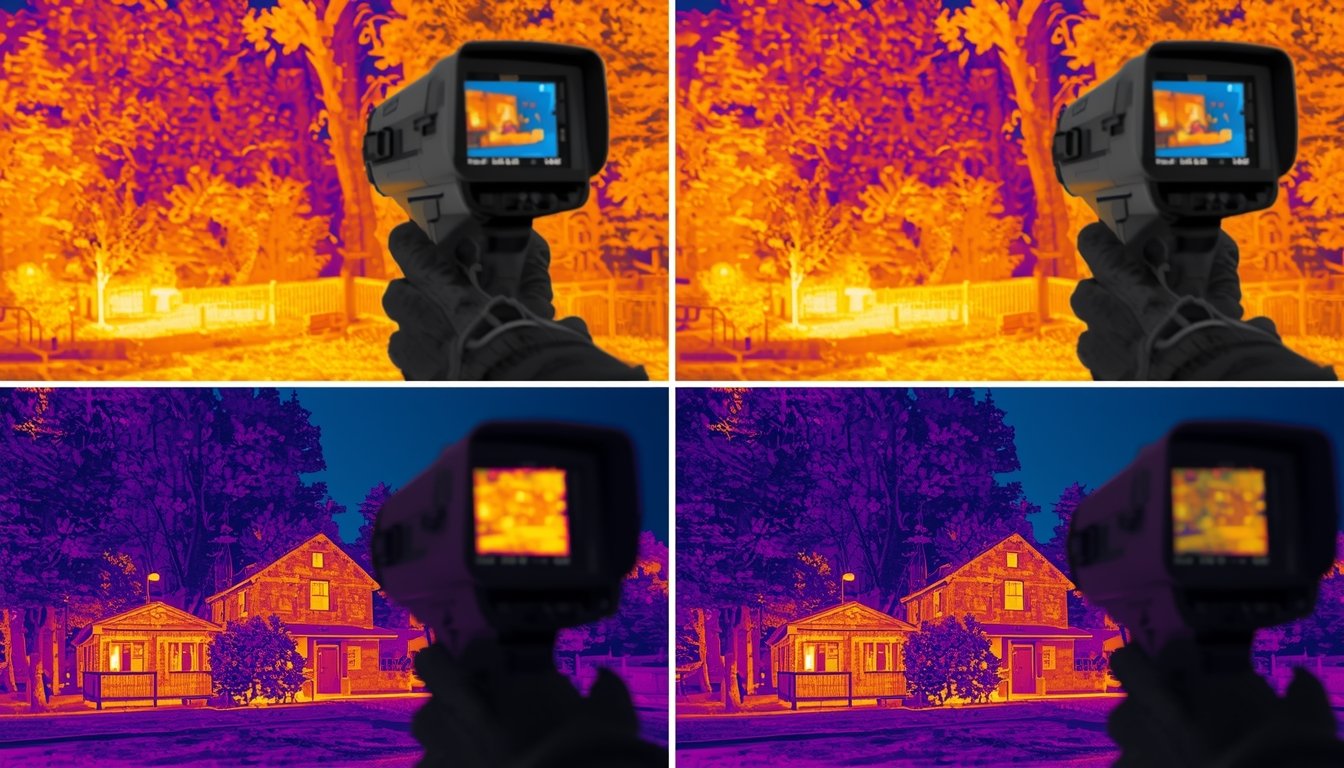
A thermal camera can be used for home inspection by scanning walls, ceilings, floors, and systems to identify temperature differences that indicate issues like heat loss, moisture, air leaks, or electrical problems. The key is to use it under the right conditions, scan methodically, and interpret patterns correctly rather than relying on isolated spots.
Preparing your home for an accurate thermal inspection
Before using a thermal camera, preparation is critical. Without the right conditions, even a high-quality device will produce limited or misleading results. The most important factor is creating a clear temperature difference between surfaces.
Start by running your heating or cooling system long enough to stabilise indoor temperatures. Ideally, there should be a noticeable contrast between inside and outside conditions. This allows temperature variations to show clearly in the scan.
Make sure windows and doors are closed and avoid sudden temperature changes before scanning. Rapid changes can create temporary patterns that do not reflect underlying issues.
It’s also important to remove obstacles where possible. Furniture, curtains, and stored items can block access to walls and prevent you from seeing full surface patterns. A clear line of sight allows you to detect larger trends rather than isolated readings.
If you are unsure whether conditions are suitable, it helps to review how a thermal camera works so you understand why temperature contrast is essential.
How to scan your home step by step
- Start with exterior-facing walls where heat loss is most likely
- Move slowly across surfaces to capture consistent patterns
- Scan ceilings and floors, especially below bathrooms or roof areas
- Check around windows, doors, and vents for airflow issues
- Compare similar areas to identify irregularities
When scanning, consistency matters more than speed. Move the camera slowly and maintain a steady distance from the surface. This helps produce a clearer and more reliable image.
Focus on patterns rather than individual spots. A single cold or warm area may not mean much on its own, but repeated or structured patterns often indicate real issues.
For example, a wall showing alternating warm and cool sections may suggest insulation gaps, while streaks near windows could indicate air leaks. Comparing similar walls or rooms helps confirm whether a pattern is normal or unusual.
Taking your time during this step improves accuracy and reduces the risk of missing important details.
Thermal cameras detect temperature differences rather than moisture directly, as explained in can a thermal camera detect water leaks directly or only temperature changes.
For suitable tools, see best thermal camera for detecting water leaks.
What to look for during a thermal inspection
- Cold patches indicating possible heat loss or insulation gaps
- Warm spots suggesting electrical or system-related heat
- Streaks or lines showing airflow or drafts
- Irregular patterns that may indicate moisture
Each of these patterns provides a clue about what might be happening behind the surface. The goal is not to identify the exact problem immediately, but to narrow down where further inspection is needed.
For example, a cold patch on a wall may indicate missing insulation or an air leak, while a cool irregular area on a ceiling could suggest moisture from a leak.
It’s important to observe how these patterns relate to the structure of the home. Straight lines may follow framing or duct paths, while irregular shapes are more likely to indicate moisture or spreading issues.
By focusing on patterns and consistency, you can avoid misinterpreting what the camera is showing.
How to interpret results without misdiagnosing issues
Thermal imaging is a powerful tool, but it does not provide direct answers. It shows temperature differences, which must be interpreted correctly to avoid mistakes.
For example, a cold area does not automatically mean there is a leak. It could be caused by air movement, insulation gaps, or even shading from external conditions. Similarly, a warm spot might indicate electrical activity, but it could also be influenced by external heat sources.
This is why it is important to confirm findings using other methods. Checking for drafts, visible damage, or moisture can help verify what the thermal image suggests.
Comparing multiple areas is also useful. If the same pattern appears consistently across similar surfaces, it is more likely to indicate a real issue. Isolated readings should be treated with caution.
Understanding these limitations helps you use the camera effectively and avoid unnecessary repairs or incorrect conclusions.
How to confirm findings and take action
Once you identify areas of concern, the next step is to confirm the issue and decide what action to take. This ensures that you address the correct problem rather than relying on assumptions.
After scanning:
Check for visible signs such as cracks, stains, or gaps in the same location.
Feel for drafts or airflow around the area.
Use additional tools, such as moisture meters, if needed.
Monitor the area over time to see if patterns change.
These steps help confirm whether the thermal pattern is caused by insulation issues, air leaks, moisture, or system problems.
If the issue is simple, such as a draft or insulation gap, it can often be resolved quickly. More complex problems, such as hidden leaks or electrical faults, may require professional inspection.
Using a thermal camera in combination with these checks allows you to make informed decisions and avoid unnecessary work.
Practical tips for getting consistent results
Consistency is key when using a thermal camera for home inspection. Small changes in conditions or technique can significantly affect the results.
Scan at similar times of day to maintain consistent conditions. Avoid scanning immediately after heating or cooling changes, as this can distort readings.
Keep the camera at a steady distance and angle to ensure accurate measurements. Sudden movements or changes in position can make patterns harder to interpret.
Repeat scans if needed. If a pattern appears consistently, it is more likely to represent a real issue rather than a temporary variation.
By following a structured approach and maintaining consistent conditions, you can improve the accuracy of your inspections and gain a clearer understanding of your home’s performance.