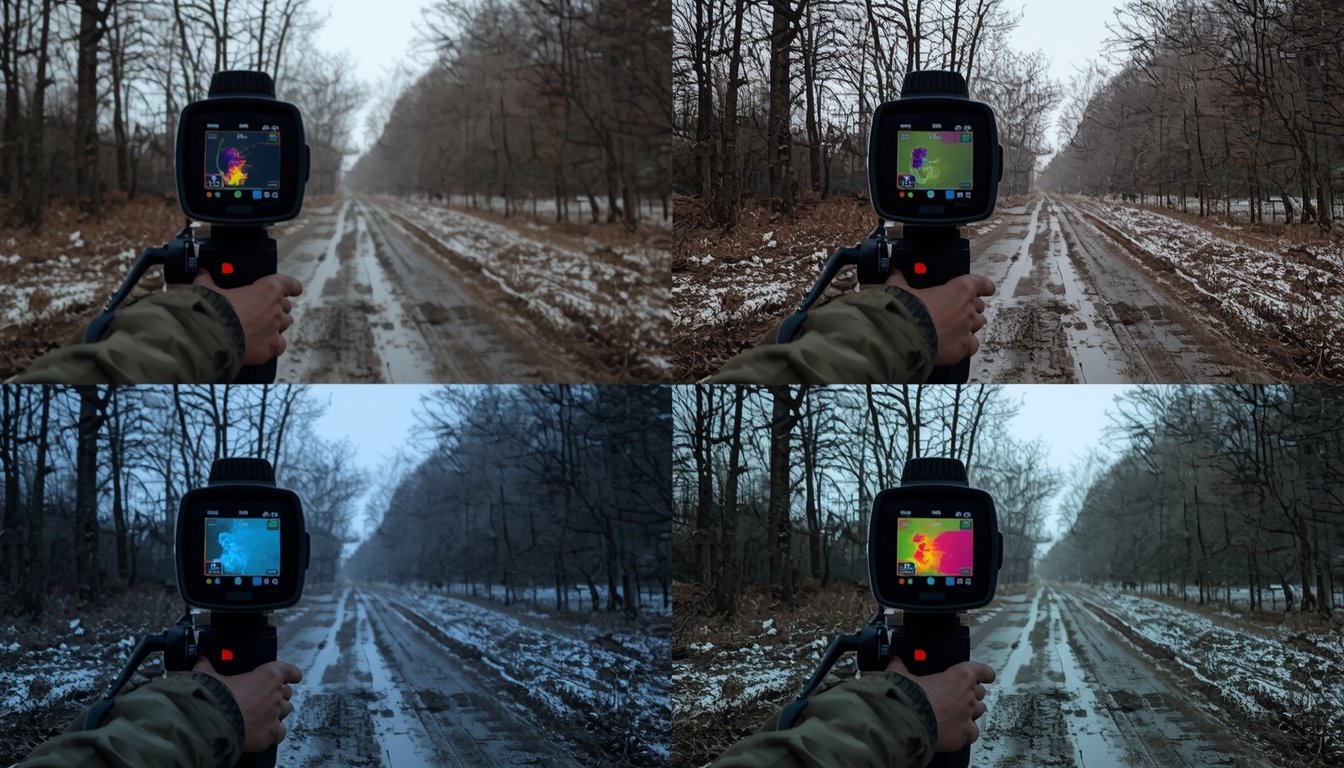
The best conditions for using a thermal camera at home are when there is a clear temperature difference between indoors and outdoors, stable airflow, and minimal external interference. These conditions allow temperature patterns to show clearly, making it easier to identify issues like heat loss, air leaks, or moisture.
Why temperature difference is critical for accurate results
A thermal camera relies on temperature contrast to produce useful images. If surfaces are all at a similar temperature, the camera will show very little detail, even if problems exist.
For most home inspections, you need a noticeable difference between indoor and outdoor temperatures. This can be achieved by running heating in colder weather or cooling in warmer conditions. The greater the contrast, the clearer the patterns will appear.
For example, during winter, heated indoor air creates a strong contrast against colder exterior walls. This makes insulation gaps and drafts much easier to detect. In summer, the opposite applies when cooling systems are running.
Without this contrast, issues like heat loss or air leakage may not be visible. This is one of the most common reasons people get unclear or misleading results when using a thermal camera.
If you want to understand how these temperature differences affect what you see, it helps to review how a thermal camera works before scanning.
Environmental conditions that improve scan quality
Beyond temperature difference, several environmental factors can influence how accurate your thermal scan will be. Controlling these factors helps ensure more reliable results.
Key conditions to aim for include:
- Stable indoor temperatures (avoid sudden heating or cooling changes)
- Minimal wind or drafts that can distort surface temperatures
- No direct sunlight on surfaces being scanned
- Dry conditions, as moisture can affect temperature readings
For example, scanning a wall that has been exposed to direct sunlight can produce misleading results because the surface may appear warmer than it actually is due to solar heating.
Similarly, strong airflow from open windows or fans can create artificial temperature patterns that do not reflect underlying problems.
It’s also important to allow time for conditions to stabilise. If you’ve just turned on heating or cooling, wait until temperatures have evened out across the space before scanning.
These steps help ensure that what you see in the thermal image reflects real conditions rather than temporary environmental effects.
Environmental conditions play a major role in results, as explained in does weather affect thermal camera accuracy.
For device options, see best thermal cameras for home use.
When and how to get the most reliable results
Timing plays a major role in getting accurate thermal readings. The best times to scan are typically early morning or late evening, when external conditions are more stable and there is less influence from sunlight.
During these times, temperature differences are often more consistent, and surfaces are less affected by external factors. This makes it easier to identify patterns related to insulation, airflow, or moisture.
When scanning, move slowly and consistently across surfaces, and compare similar areas rather than focusing on a single spot. Patterns that repeat or stand out are more likely to indicate real issues.
It’s also useful to scan multiple times if needed. If a pattern appears consistently under the same conditions, it is more likely to represent an actual problem rather than a temporary variation.
By choosing the right conditions and using a consistent approach, you can significantly improve the accuracy of your thermal inspections and make better decisions about what to investigate or fix.