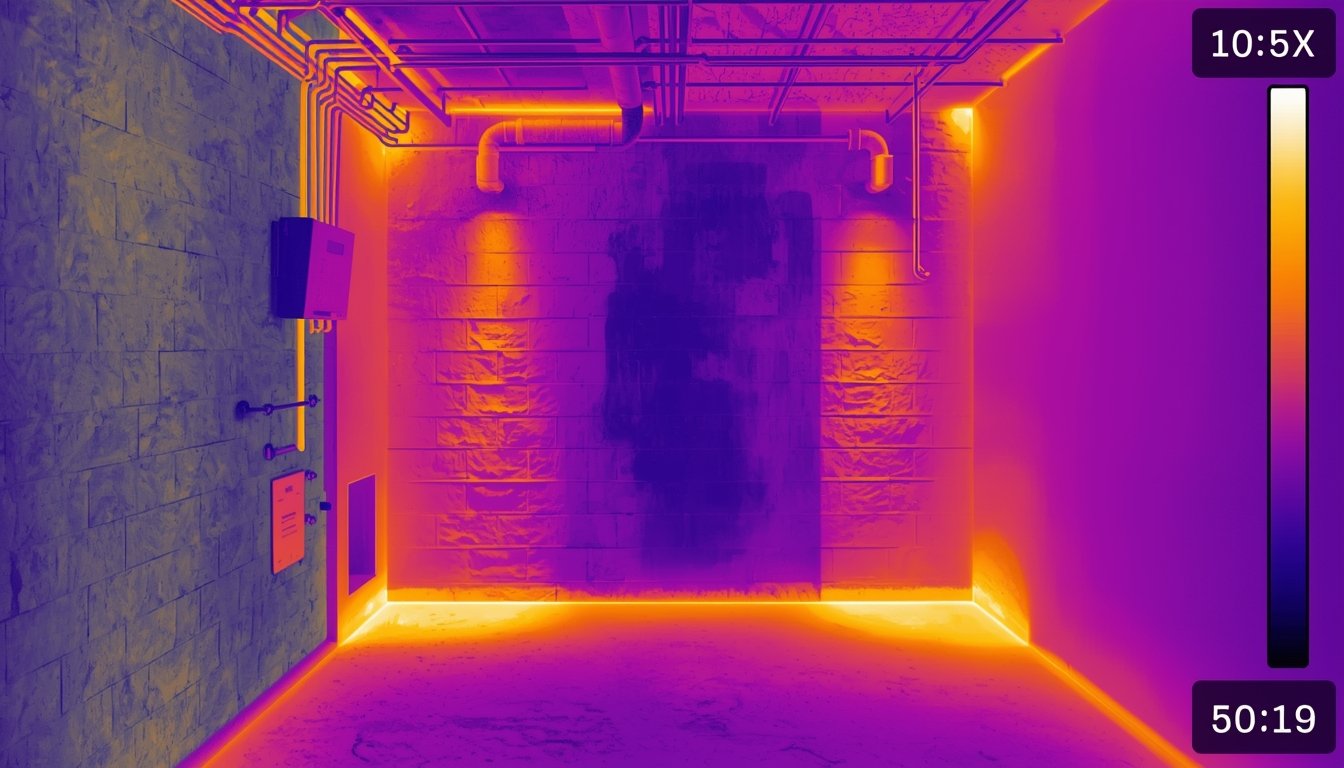
You can identify underfloor heating problems by checking for uneven floor temperatures, weak heating output, or areas that do not warm up at all. A thermal camera is one of the most effective ways to confirm these issues by showing how heat is distributed across the floor.
Common signs of underfloor heating problems
Underfloor heating systems are designed to provide consistent, even warmth across the entire floor surface. When something goes wrong, the most noticeable sign is uneven heating.
You may feel certain areas that are warm while others remain cold, even when the system has been running for some time. This inconsistency often points to a problem within the system.
Typical signs include:
- Cold patches on the floor that never warm up
- Sections that heat slower than the rest of the room
- Uneven temperature distribution across the floor
- Reduced overall heating performance
For example, a blocked pipe or faulty heating element can prevent heat from reaching part of the floor. Similarly, trapped air in a hydronic system can stop water from circulating properly, creating cold zones.
In some cases, the issue may not be within the heating system itself. Poor insulation beneath the floor can cause heat to escape downward, reducing the effectiveness of the system and creating uneven results.
Thermal cameras can show heating patterns but not the exact cause of issues, as explained in what are the limitations of thermal cameras in a house.
For suitable tools, see best thermal camera for home inspection.
Using a thermal camera to diagnose floor heating issues
A thermal camera provides a clear visual map of how heat is distributed across the floor. Instead of relying on touch alone, you can see patterns that reveal exactly where the system is working and where it is not.
When scanning a floor with underfloor heating, a properly functioning system should show an even and consistent heat pattern. Any irregularities, such as cold spots or uneven lines, can indicate a problem.
Common thermal patterns include:
- Cold areas where no heat is reaching the surface
- Uneven lines suggesting blocked or restricted flow
- Temperature differences between sections of the same room
- Heat loss near edges or poorly insulated areas
These patterns help narrow down the issue quickly. For example, a continuous cold section may suggest a fault in a heating loop, while patchy patterns could indicate circulation issues.
To get accurate results, the system needs to be running long enough to create a clear temperature difference. If conditions are not suitable, the thermal image may not show useful detail. If needed, review the best conditions for using a thermal camera at home before scanning.
How to confirm and fix underfloor heating issues
Once you identify a potential problem, the next step is to confirm the cause and decide on the appropriate fix. This ensures you address the issue effectively without unnecessary work.
After locating a problem area:
- Check system controls and thermostats to ensure correct settings
- Inspect for trapped air or circulation issues in hydronic systems
- Look for signs of damage or faults in electrical systems
- Compare performance across different zones or rooms
These checks help determine whether the issue is related to system operation, installation, or structural factors like insulation.
If the problem is minor, such as a control setting or airflow issue, it may be resolved quickly. More complex problems, such as damaged pipes or electrical faults, may require professional repair.
Using a thermal camera allows you to pinpoint the exact area of concern, making it easier to diagnose and resolve underfloor heating problems without unnecessary disruption.