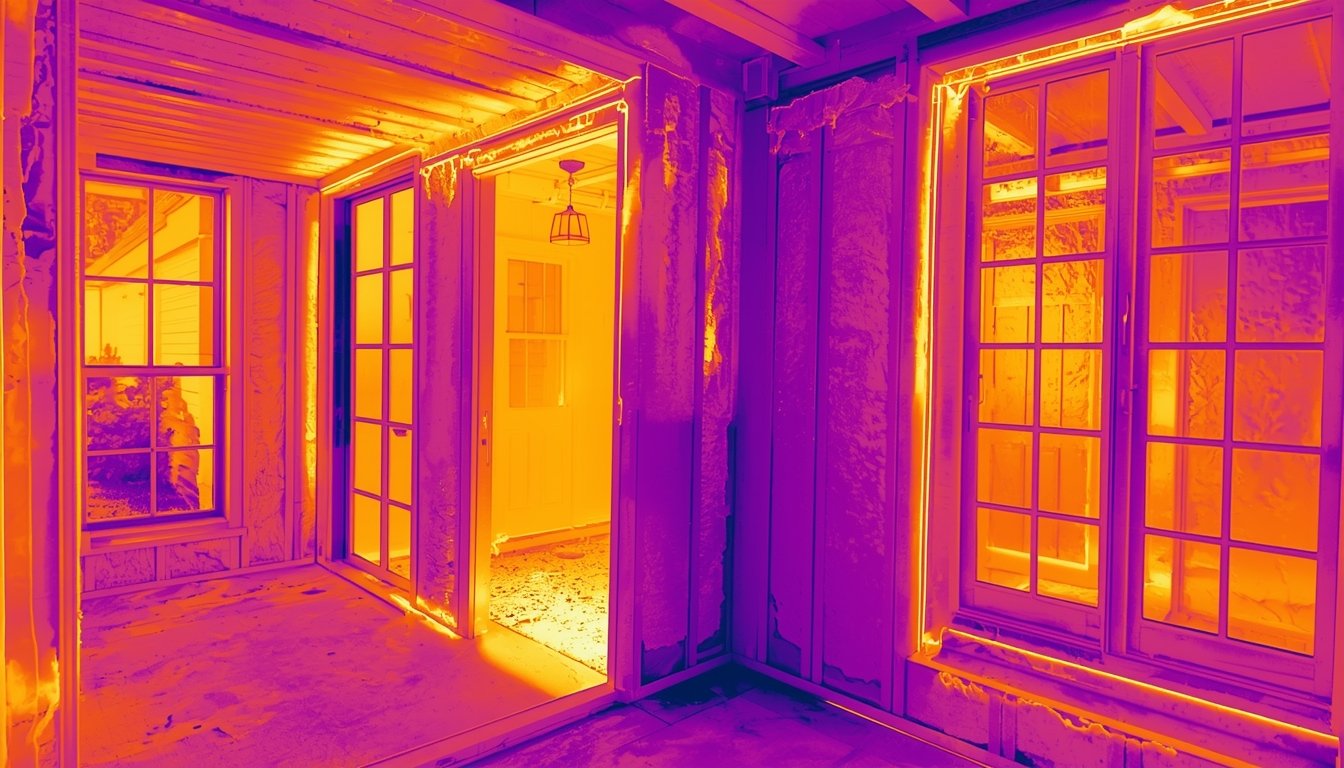
Cold spots on your walls are usually caused by heat escaping unevenly, often due to poor insulation, air leaks, or moisture affecting the surface. These temperature differences make certain areas feel noticeably colder than the rest of the wall.
Common causes of cold spots on walls
Cold spots don’t appear randomly — they are usually linked to how heat is moving through the wall. When part of the wall allows more heat to escape, that section becomes cooler than the surrounding area.
The most common causes include:
- Missing or uneven insulation inside the wall
- Air leaks allowing cold air to enter
- Structural framing creating thermal bridges
- Moisture buildup affecting heat retention
For example, if insulation has settled or was not installed properly, certain sections of the wall will lose heat faster. This often shows up as patchy or uneven cold areas.
Air leaks can also create cold spots, especially around windows, doors, or joints in the wall. Even small gaps can allow cold air to enter and lower the surface temperature.
In some cases, the wall structure itself can cause temperature variation. Materials like timber or metal framing conduct heat differently, creating visible patterns where heat escapes more easily.
How to identify what is causing the cold spots
Once you notice a cold spot, the next step is to figure out what is actually causing it. Different causes require different solutions, so identifying the source is important.
Start by observing the pattern. If the cold area appears in a consistent shape or line, it may be linked to framing or insulation gaps. If it appears near edges or openings, it’s more likely to be an air leak.
You can also check for drafts by feeling around the area. If you notice airflow, that suggests air leakage rather than insulation failure.
A thermal camera can make this process much easier by clearly showing temperature differences across the wall. Instead of guessing, you can see patterns that point to specific issues. If you want to understand how these patterns relate to insulation problems, it helps to review how thermal cameras find insulation issues before making conclusions.
Moisture is another possibility. Damp areas often appear cooler, so if the cold spot is irregular and changes over time, it may be worth checking for leaks or condensation.
Cold spots can have several causes and are not always straightforward to interpret, as explained in what are the limitations of thermal cameras in a house.
To investigate further, see best thermal camera for insulation problems.
How to fix cold spots effectively
After identifying the likely cause, you can focus on the right solution rather than trying random fixes. This saves time and ensures the problem is addressed properly.
If insulation is the issue, adding or replacing insulation in the affected area can restore consistent temperature. This may involve accessing wall cavities or improving insulation in accessible spaces like attics.
If air leaks are the cause, sealing gaps around windows, doors, or joints is usually effective. This can include replacing weatherstripping, applying sealant, or improving the fit of frames.
If moisture is involved, the priority is to find and fix the source of water before addressing the temperature issue. Otherwise, the problem will continue to return.
Fixing cold spots improves comfort and helps reduce energy loss. By targeting the specific cause, you can create a more even temperature across your walls and avoid ongoing issues.