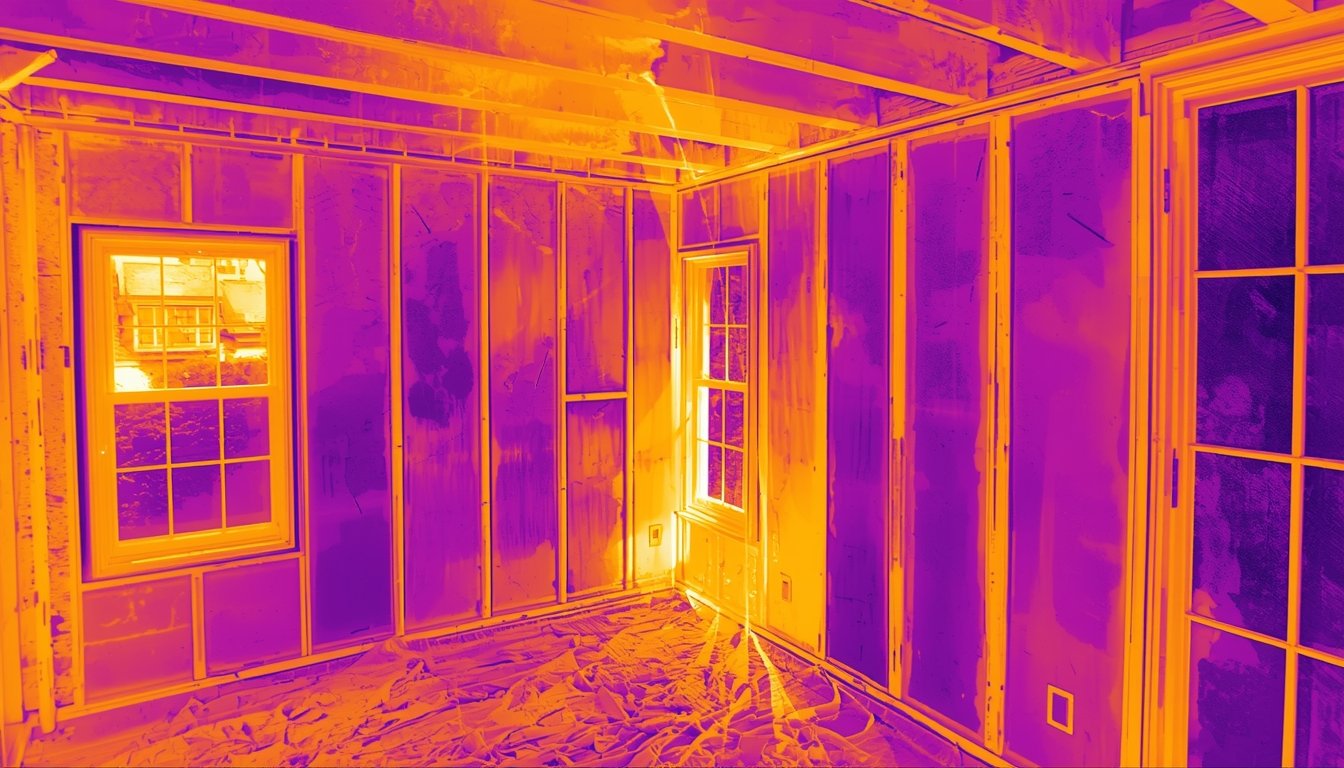
You can check for air leaks around windows and doors by feeling for drafts, looking for signs of air movement, and using tools like a thermal camera to detect temperature differences. These methods help you pinpoint where outside air is entering so you can seal gaps effectively.
How to find air leaks using simple checks
Before using any tools, you can often detect air leaks with basic hands-on checks. These methods are quick and can confirm whether a problem exists.
Start by running your hand slowly around the edges of windows and doors, especially on colder or windy days. If you feel a noticeable draft or temperature change, that’s a clear sign of air leakage.
You can also use simple techniques like holding a thin piece of tissue or paper near the frame. If it moves or flutters, air is entering or escaping through a gap.
Look for visual clues as well. Gaps in seals, worn weatherstripping, or visible light coming through edges can all indicate leakage points.
These checks are useful for identifying obvious issues, but smaller leaks may not be noticeable without additional help. That’s where more precise methods can give you a clearer picture.
Air leaks often appear as temperature differences on surfaces, but interpretation depends on conditions, as explained in does weather affect thermal camera accuracy.
For suitable devices, see best thermal camera for home inspection.
Using a thermal camera to detect hidden drafts
A thermal camera can make air leaks much easier to identify by showing temperature differences around windows and doors. Instead of relying on touch, you can see exactly where cold or warm air is affecting the surface.
When scanning, air leaks typically appear as streaks or patches that differ from the surrounding temperature. For example, during colder weather, incoming air may create cooler lines around the frame or along seals.
Common thermal patterns include:
- Cool streaks along window or door edges
- Uneven temperature distribution across the frame
- Cold patches at corners or joints
- Irregular patterns near seals or trim
These patterns help you pinpoint the exact location of the leak, even if it’s too small to feel. This is especially useful when dealing with multiple windows or subtle gaps.
To get accurate results, you need a temperature difference between inside and outside. Without that contrast, the thermal image may not clearly show the airflow.
If you’re unsure how to interpret what you see, it helps to understand the best conditions for using a thermal camera at home before relying on the results.
How to confirm and fix air leaks effectively
Once you’ve identified potential leak areas, the next step is to confirm the issue and decide how to fix it. This ensures you’re addressing the real problem rather than guessing.
After locating a suspected air leak:
- Inspect seals and weatherstripping for wear or gaps
- Check for loose frames or poor installation
- Look for cracks in surrounding walls or trim
- Test the area again after temporary sealing (like tape) to confirm improvement
These checks help you determine whether the issue is caused by worn materials, poor sealing, or structural gaps.
Fixes may include replacing weatherstripping, sealing gaps with caulk, or adjusting the fit of doors and windows. In some cases, larger repairs may be needed if the frame itself is not properly installed.
Addressing air leaks can improve comfort, reduce energy loss, and make heating or cooling systems more efficient. By identifying the exact source first, you avoid unnecessary work and focus on the areas that will have the biggest impact.