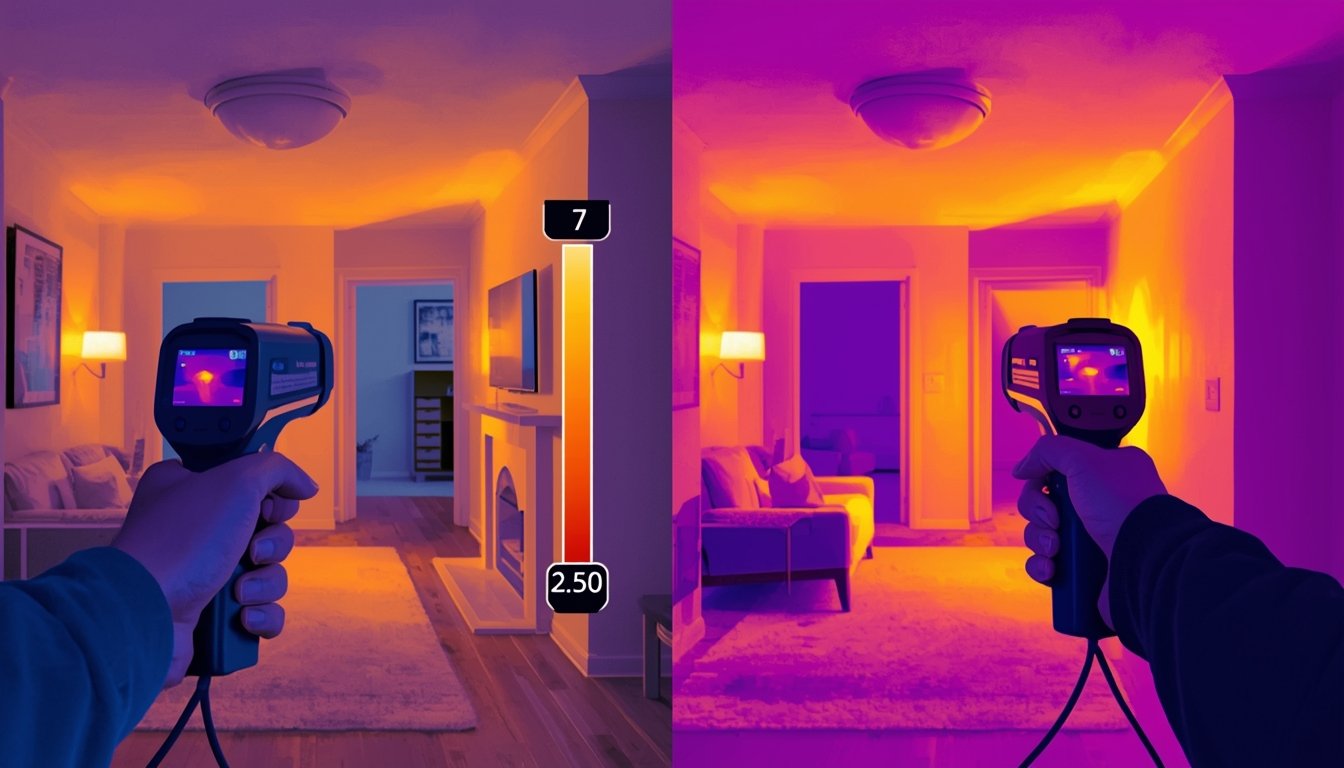
You can check for roof leaks without opening the ceiling by looking for moisture signs on surfaces, monitoring changes over time, and using tools like a thermal camera to detect temperature differences caused by damp areas. The goal is to identify where water is affecting the ceiling before visible damage becomes severe.
How to spot early signs of a roof leak from inside
The first step is to check for visible and subtle signs that indicate moisture is entering from above. Roof leaks often start small, so catching them early can prevent larger repairs.
Look carefully at ceilings and upper walls for:
- Discoloration or faint yellow/brown stains
- Peeling paint or bubbling plaster
- Slight sagging or soft spots in the ceiling
- A musty smell, especially after rain
Even if the marks are small or inconsistent, they can indicate water entering through the roof and spreading slowly across the ceiling cavity. It’s important to check these areas in different lighting conditions, as some stains are easier to see at certain angles.
Also pay attention to timing. If a stain becomes darker or expands after rain, that strongly suggests an active roof leak rather than a past issue.
At this stage, you are not trying to fix the problem — just confirm whether there is a pattern that suggests water intrusion from above.
Using a thermal camera to locate hidden moisture
If there are no obvious visual signs, a thermal camera can help identify moisture before it becomes visible. It works by detecting temperature differences caused by damp materials, which often appear cooler than surrounding dry areas.
When scanning a ceiling, look for uneven patterns rather than isolated spots. Moisture tends to spread, so you may see a larger cool area rather than a single point. This can help you estimate how far the leak has travelled.
For example, a roof leak may not show directly below the entry point. Water can move along beams or insulation before appearing on the ceiling surface. A thermal scan can reveal this hidden spread.
To get useful results, scan when there is a temperature difference between inside and outside. Early morning or after sunset often works well. Without temperature contrast, the camera may not show clear patterns.
If you’re unsure how to interpret what you see, it helps to understand how thermal cameras detect water leaks before relying on the results.
Thermal imaging can help identify suspicious areas, but it does not confirm a leak directly, as explained in can a thermal camera detect water leaks directly or only temperature changes.
For suitable tools, see best thermal camera for detecting water leaks.
What to check next before opening anything
Once you’ve identified a possible problem area, the next step is to confirm it without cutting into the ceiling. This helps avoid unnecessary damage and keeps repairs focused.
After spotting a suspicious area:
- Check the roof above for damaged or missing tiles, flashing issues, or debris buildup
- Inspect gutters and downpipes for blockages that may cause water overflow
- Look in the attic or roof space (if accessible) for visible moisture or damp insulation
- Monitor the area during the next rainfall to see if the pattern changes
These checks often help narrow down the source of the leak without invasive work. For example, a blocked gutter can cause water to back up under roofing materials, leading to ceiling moisture without obvious roof damage.
If the issue remains unclear after these steps, then opening the ceiling or calling a professional may be necessary. But in many cases, these simple checks are enough to identify the cause and plan the next step with confidence.