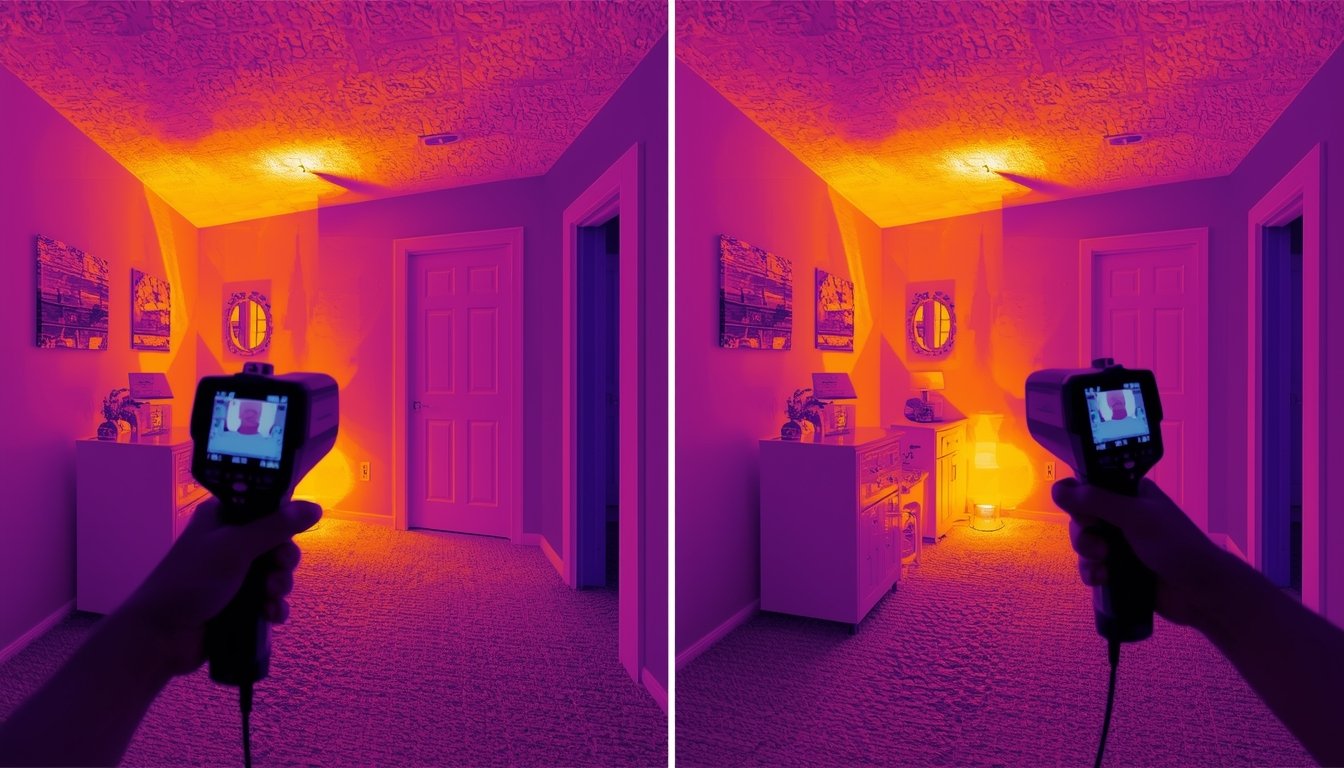
A thermal camera can detect temperature differences on surfaces inside a house, which helps reveal issues like heat loss, air leaks, moisture buildup, and electrical hotspots. It does not see through walls, but it highlights patterns that indicate hidden problems affecting performance or safety.
Common problems a thermal camera can detect
A thermal camera is most useful for identifying problems that cause uneven temperatures across surfaces. These differences often point to underlying issues that would otherwise go unnoticed.
In a typical home, a thermal camera can help detect:
- Heat loss through walls, ceilings, and floors
- Air leaks around windows, doors, and vents
- Missing or poorly installed insulation
- Moisture buildup behind walls or ceilings
- Overheating electrical components or wiring
For example, if a wall shows colder areas than the surrounding surface, it may indicate missing insulation or a draft. If a ceiling shows irregular cool patches, it could suggest moisture from a leak above.
The key advantage is speed. Instead of opening walls or guessing, a thermal scan gives a clear visual starting point for further investigation. This makes it especially useful when you are trying to narrow down the cause of a problem quickly.
While thermal cameras can highlight temperature differences across surfaces, they do not directly identify the underlying cause, as explained in what are the limitations of thermal cameras in a house.
How thermal cameras help diagnose hidden issues
Thermal cameras do not directly identify the exact cause of a problem, but they provide strong clues by showing where temperature differences exist. These clues can guide your next step.
For example, if you suspect a leak but cannot see any water damage, a thermal camera may reveal a cooler area where moisture is affecting the surface temperature. This doesn’t confirm a leak on its own, but it tells you where to investigate further.
Similarly, if one room feels colder than the rest, a thermal scan can show whether the issue is due to insulation gaps, air leakage, or uneven heating. In many cases, this can save time compared to checking each possible cause manually.
It’s also commonly used for electrical checks. Overheating wires or components often appear as hot spots on a thermal image, which can help identify potential safety issues before they become serious.
Understanding how thermal imaging works makes it easier to interpret these results correctly. If you’re unsure about the basics, it helps to start with how a thermal camera works before relying on the readings.
What a thermal camera cannot detect directly
Despite its usefulness, a thermal camera has clear limitations. It does not detect specific materials or problems directly — it only shows temperature differences on surfaces.
This means it cannot:
- See inside walls or through solid objects
- Confirm the presence of mold, water, or pests on its own
- Measure exact internal conditions without context
- Provide reliable results if there is little temperature contrast
For example, mold itself is not visible in a thermal image. However, the moisture conditions that allow mold to grow may create temperature differences that the camera can detect.
Environmental conditions also matter. If indoor and outdoor temperatures are similar, there may not be enough contrast to highlight insulation problems or air leaks clearly.
Because of this, thermal cameras are best used as a supporting tool, not a final answer. They help you identify where a problem might exist, but further checks are usually needed to confirm the exact cause.
If you are considering using one at home, this guide to best thermal cameras for home use outlines practical options based on common household needs.